Smart Power Production

Smart Power Production focuses on making home energy measurable and controllable. The goal is maximum availability, lower waste, backup readiness, and a path toward net-zero electricity.

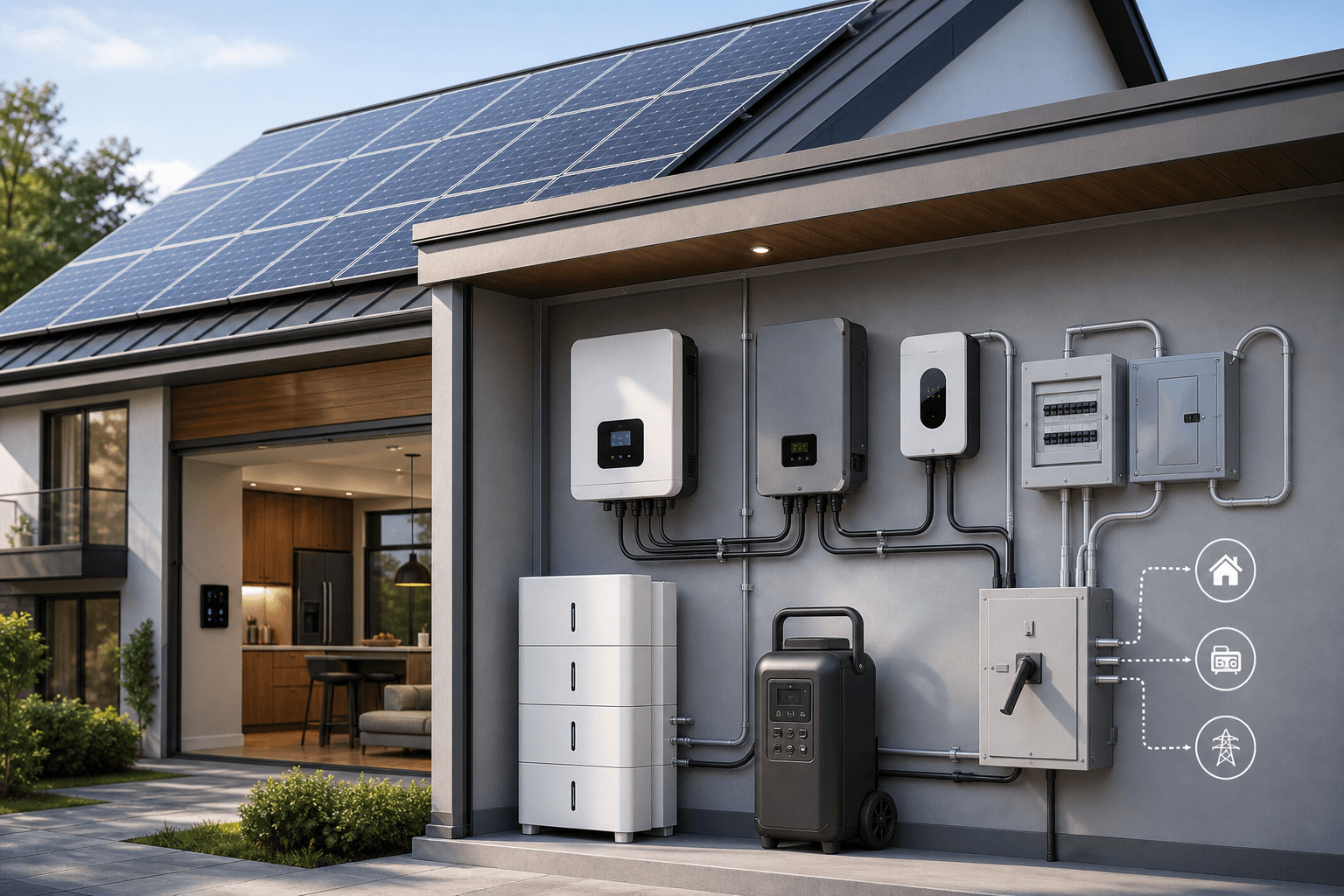
Domestic solar power system with hybrid inverter, battery storage, meters, and rooftop panels
Domestic solar power system with rooftop panels, hybrid inverter, battery storage, power bank, and backup integration

Smart Power Production

Domestic Solar Power

Solar production is planned as a system: panels, inverter strategy, battery storage, and backup integration.

Rooftop solar panels

Rooftop solar starts with roof area, shadow, orientation, wiring, service access, and realistic production estimates.

Smart hybrid inverters

Smart hybrid inverters connect grid, solar, battery, and load behavior. They matter because energy decisions happen continuously.

Off-grid inverters

Off-grid inverters are about independence and backup readiness, but they require careful load planning and battery sizing.

On-grid inverters

On-grid inverters make export and grid interaction possible, but policy, metering, and safety rules shape the design.

Power banks

Power banks and batteries are planned around runtime, critical loads, recharge speed, safety, and lifecycle cost.

Third backup integration

Third backup integration covers generators, alternate feeds, or emergency power paths so the system has another layer when solar and battery are not enough.

Net-zero home electricity system with solar panels, battery reserve, grid meter, household loads, and export energy flow

Smart Power Production

Net-Zero Electricity

The system is designed to maximize availability, reduce grid dependence, and support both consumption and export when possible.

Maximum power availability

Maximum power availability means deciding which loads are critical, which can be shed, and how solar, grid, batteries, and backup sources should behave during outages.

Consume and sell

Consume and sell is the economic side of solar: use what the home needs first, export intelligently where policy allows it, and understand whether the numbers justify changes.

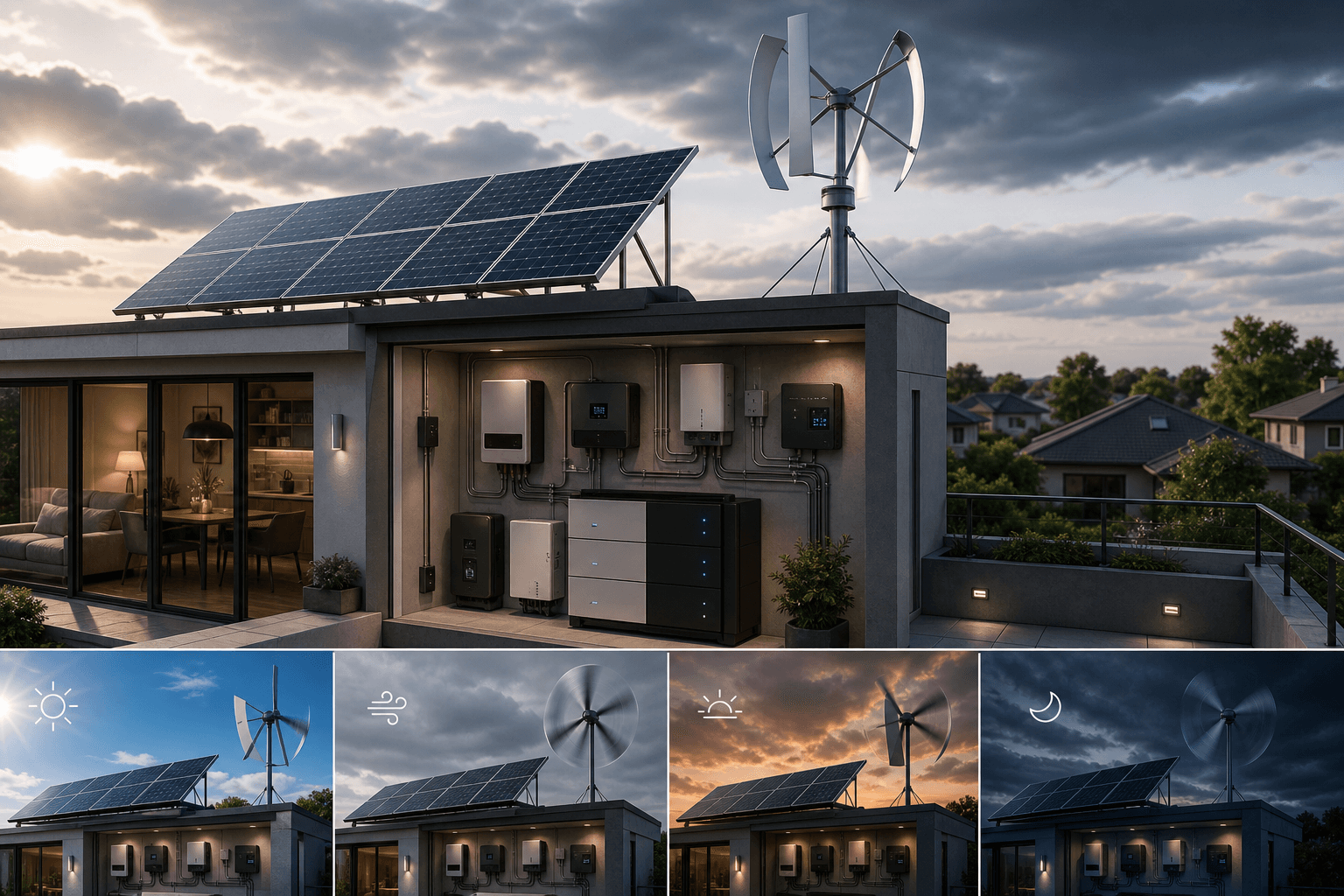
Residential solar and wind hybrid production with rooftop panels, compact wind turbine, weather-aware controller, and battery backup

Smart Power Production

Solar + Wind Hybrid

Hybrid production explores how solar and small wind can complement each other across weather, season, and time of day.

Hybrid generation

Hybrid generation explores how solar and wind could complement each other rather than duplicate the same production curve. The real question is whether the site conditions justify the hardware.

Weather-aware production

Weather-aware production connects forecast, season, battery state, and expected usage so the system can prepare instead of reacting late.

Backup planning

Backup planning separates comfort loads from survival loads. It defines what must keep running, for how long, and what gets turned off automatically when capacity drops.

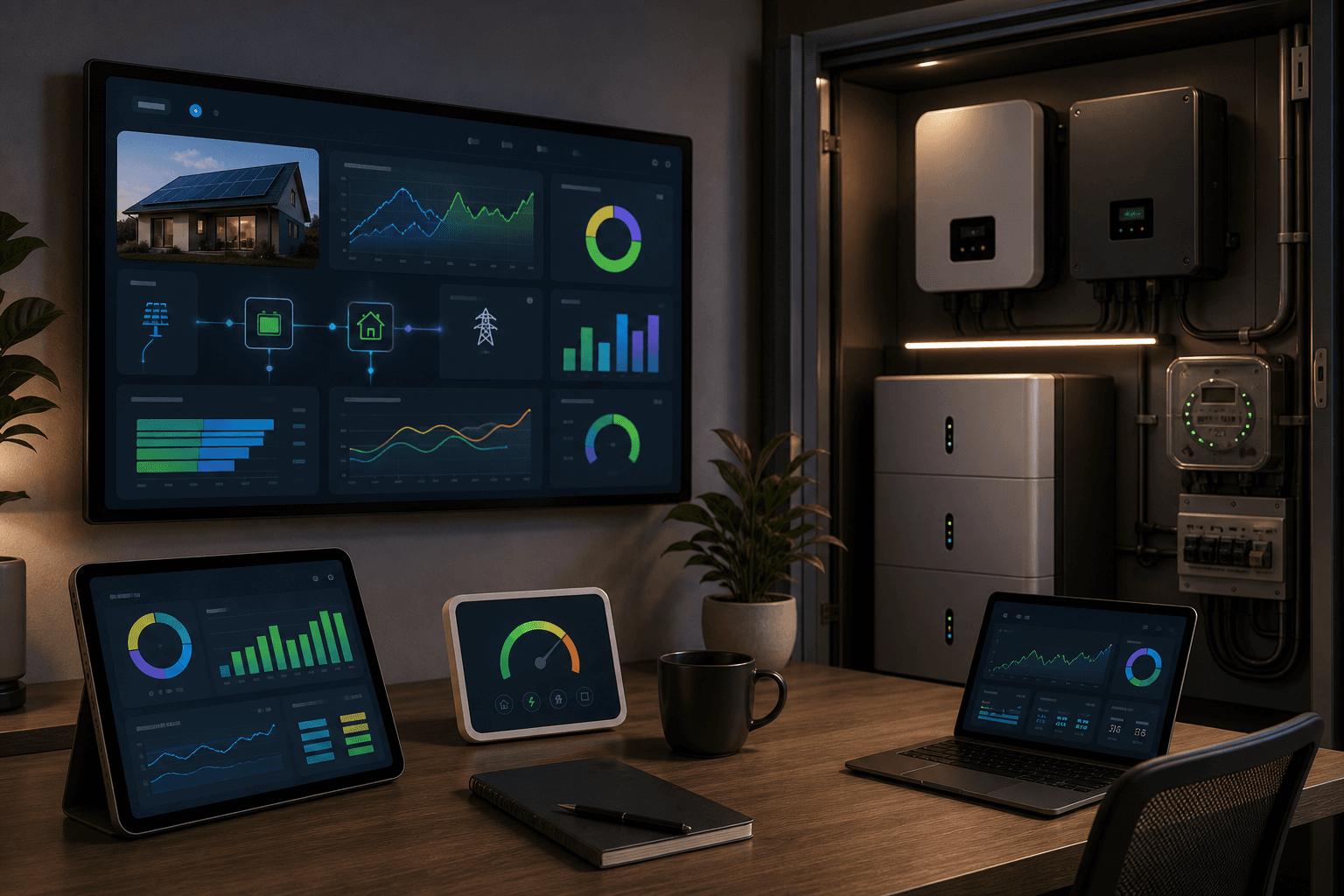
Home energy monitoring dashboard with production charts, optimization signals, savings views, earnings, smart meter, and inverter hardware

Smart Power Production

Monitoring

Dashboards make production, optimization opportunities, savings, and earnings visible.

Production

Production is tracked as a living number: today, this month, seasonal trends, loss, and whether the system is behaving as expected.

Optimization

Optimization means changing load timing, battery behavior, automation routines, and consumption patterns based on actual production.

Earnings

Earnings are only meaningful when compared with investment, maintenance, export policy, and avoided consumption.