Smart Living

Smart Living is not about scattered gadgets. It is about making the home observable and responsive: local data, custom integrations, meaningful alerts, reliable controls, and automations that reduce daily friction.

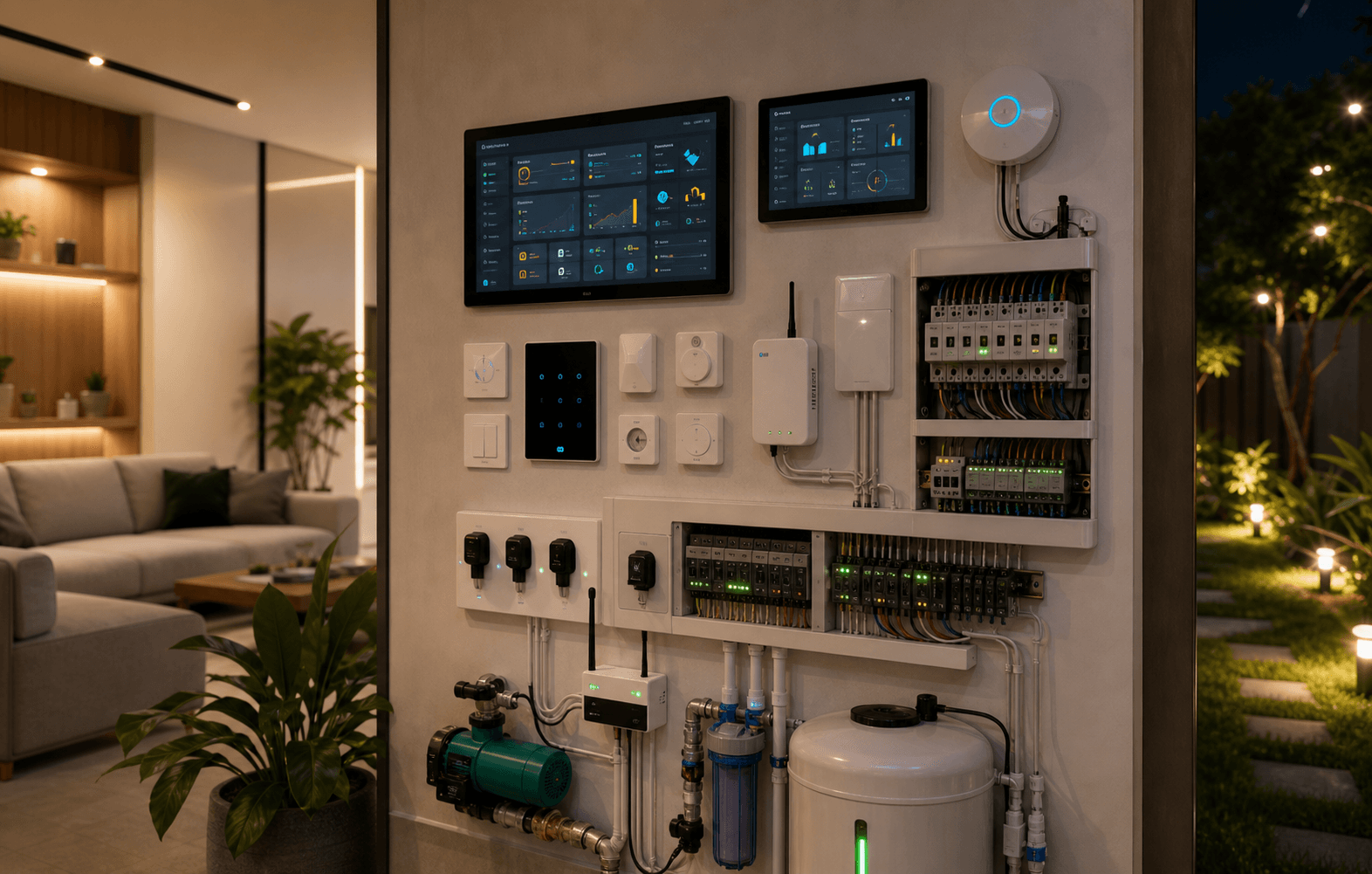
Smart living automation panel with sensors, local controllers, dashboards, lighting, and water controls
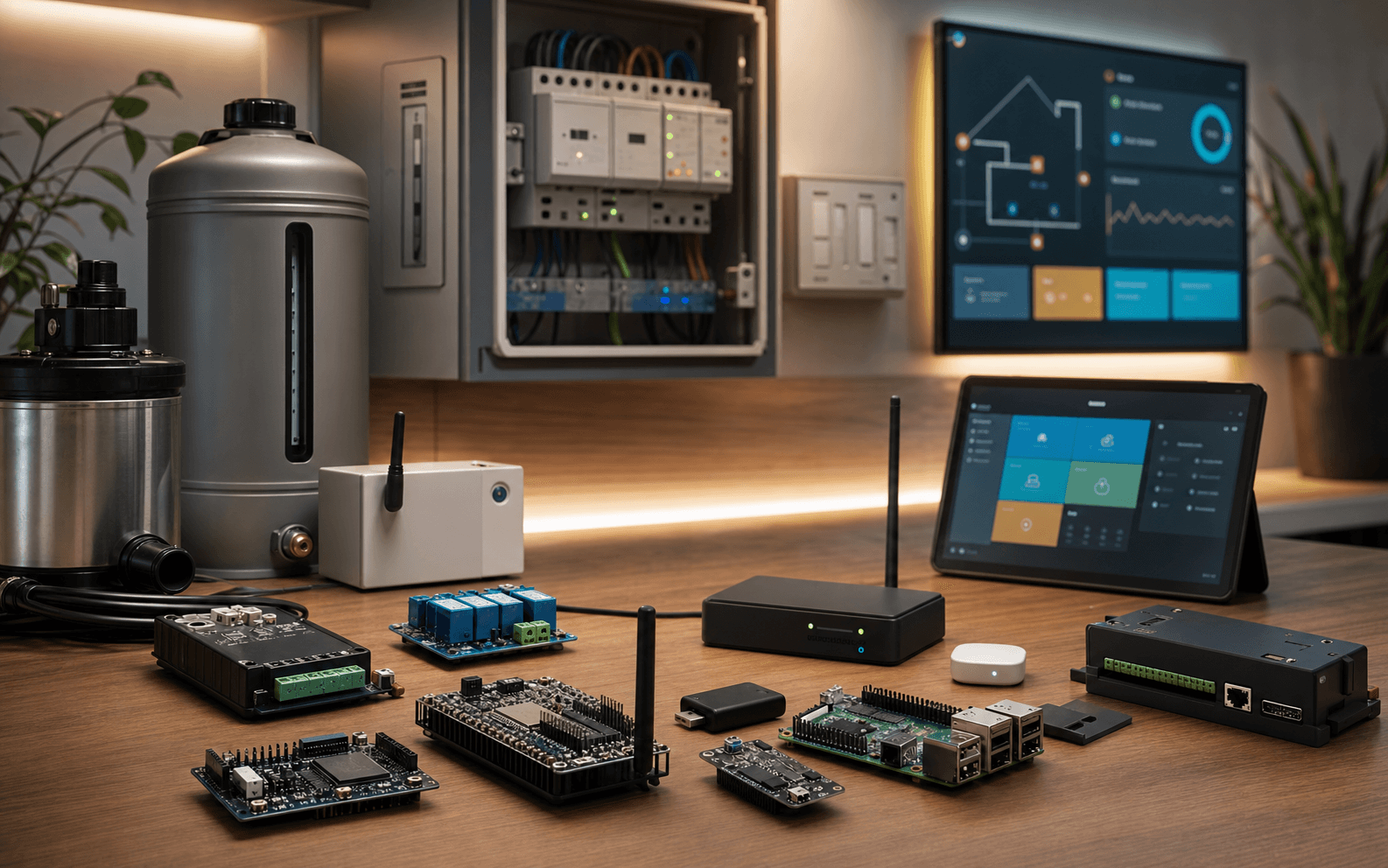
Custom smart living workbench with microcontrollers, Raspberry Pi hardware, wireless hubs, pump controls, and automation dashboard

Smart Living

Custom Builds & Integration

Custom hardware and integrations connect the physical home to dashboards, notifications, control panels, and automation logic.

ESP

ESP boards are ideal for custom sensors and control points because they are inexpensive, Wi-Fi capable, and flexible enough for real household jobs.

Arduino

Arduino is useful for simple, reliable hardware control where timing, inputs, relays, or sensors matter more than a full operating system.

Raspberry Pi

Raspberry Pi boards bridge the gap between microcontrollers and servers: dashboards, local services, camera tasks, and protocol gateways.

Zigbee

Zigbee is valuable for low-power mesh devices, but reliability depends on coordinator placement, channel planning, and device quality.

MQTT

MQTT is the messaging backbone for many automations. It keeps devices, dashboards, and logic decoupled so one change does not break everything.

Matter

Matter is watched as a cross-ecosystem standard, but it still needs to be judged by real compatibility and local-control behavior.

SmartThings

SmartThings can be useful as an ecosystem bridge, especially when existing devices already depend on it.

HomeKit

HomeKit matters for household usability because family members need simple controls, not only engineering dashboards.

Google Home

Google Home is treated as a convenience layer for voice and common controls, while core automations should not depend entirely on cloud behavior.

Alexa

Alexa is useful for voice routines and quick interactions, but critical home functions should remain operable without it.

Custom panels

Custom panels make automation approachable: room controls, status screens, scenes, and alerts placed where people actually need them.

Smart pumps and tanks

Smart pumps and tanks turn water into an observable system: levels, run time, pressure, alerts, and protection against dry runs or overflow.

Notification systems

Notification systems are designed to be useful rather than noisy. The right alert should reach the right person at the right urgency.
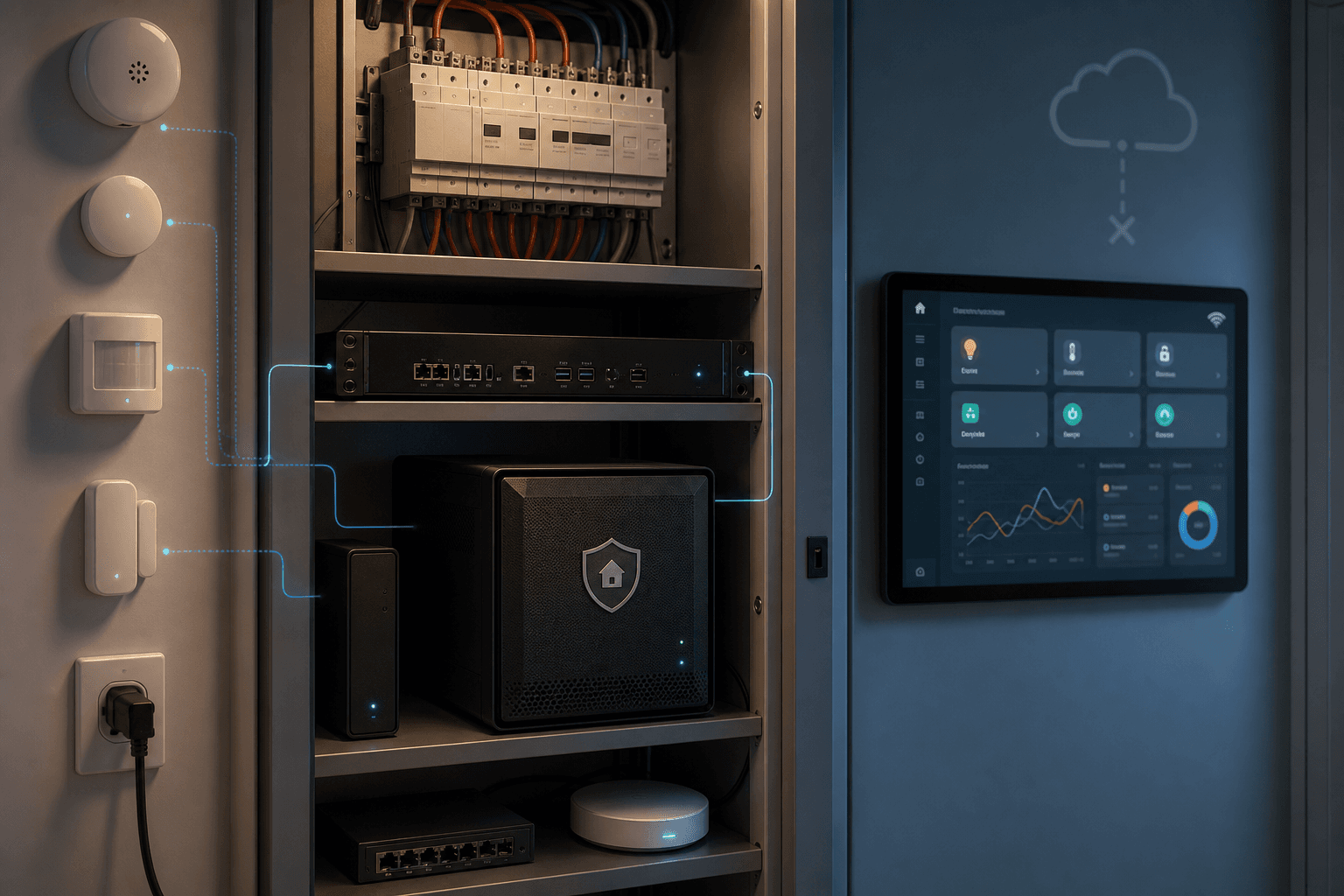
Local smart home governance closet with private controller, local hub, server, dashboard, and home sensor connections

Smart Living

Local Governance

Automation is designed around local control and local data before cloud convenience is considered.

Privacy-first local data

Privacy-first local data means sensor history, routines, cameras, and home behavior stay under household control wherever possible.

Home Assistant

Home Assistant is the local coordination layer for devices, dashboards, scenes, alerts, and automations. It is valuable because it can unify many protocols while keeping core control local.

OpenHAB

OpenHAB is considered for open automation patterns, broad integration support, and setups where rules and abstraction need to be explicit.

Gladys Assistant

Gladys Assistant is part of the local-first assistant exploration, especially where privacy and self-hosting are important.

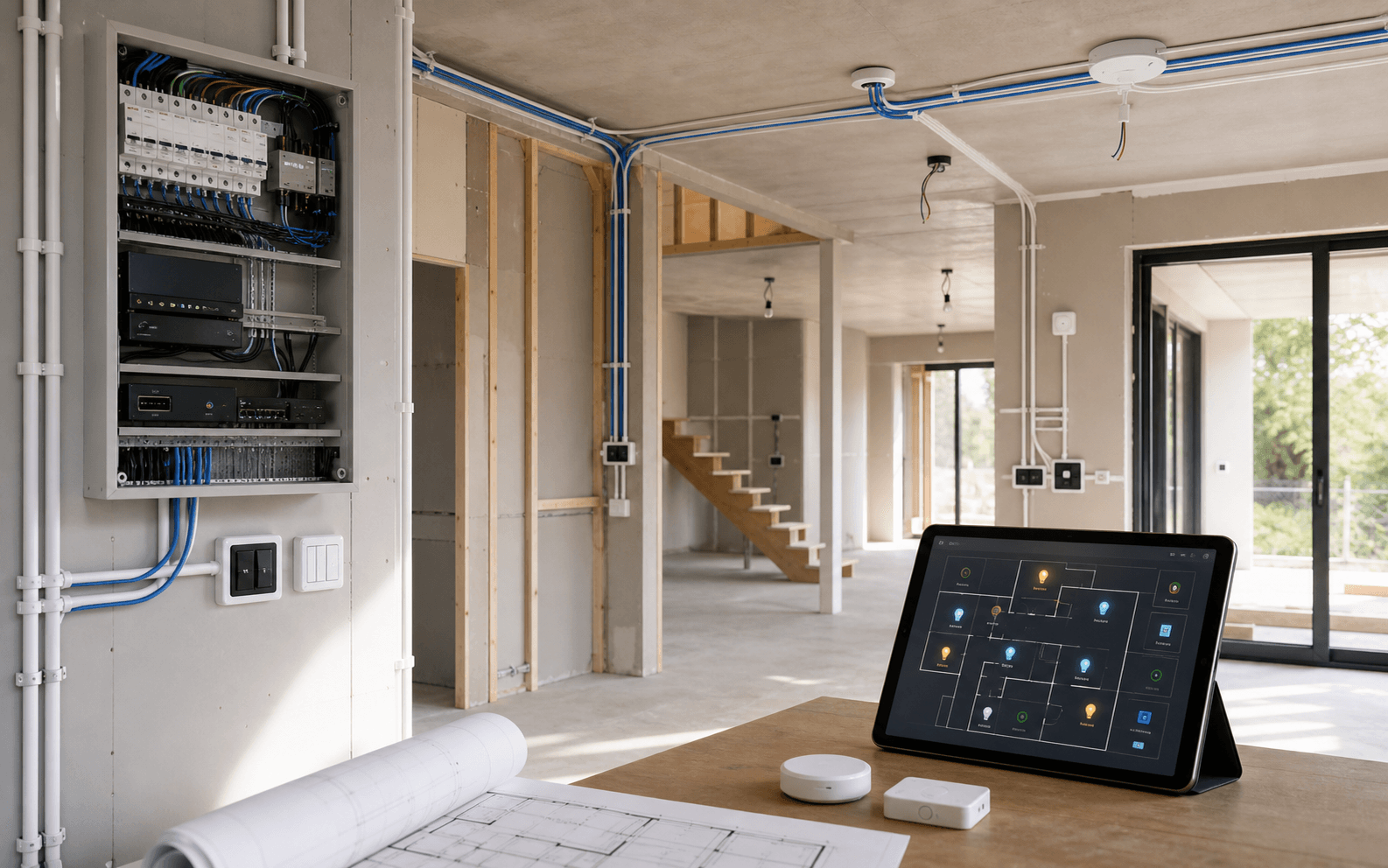
New home automation setup with structured wiring, ceiling access point, smart panel, room zones, and planning tablet

Smart Living

New Setup

For new homes, automation can be planned with wiring, zones, network placement, and power systems from day one.

New homes

New homes are the cleanest opportunity because conduit, switch boxes, network drops, panel placement, sensor locations, and power planning can be decided before walls and furniture limit the design.

Retrofitted smart home wall with wireless hub, compact relay, finished switches, sensors, and local control tablet

Smart Living

Retrofitting

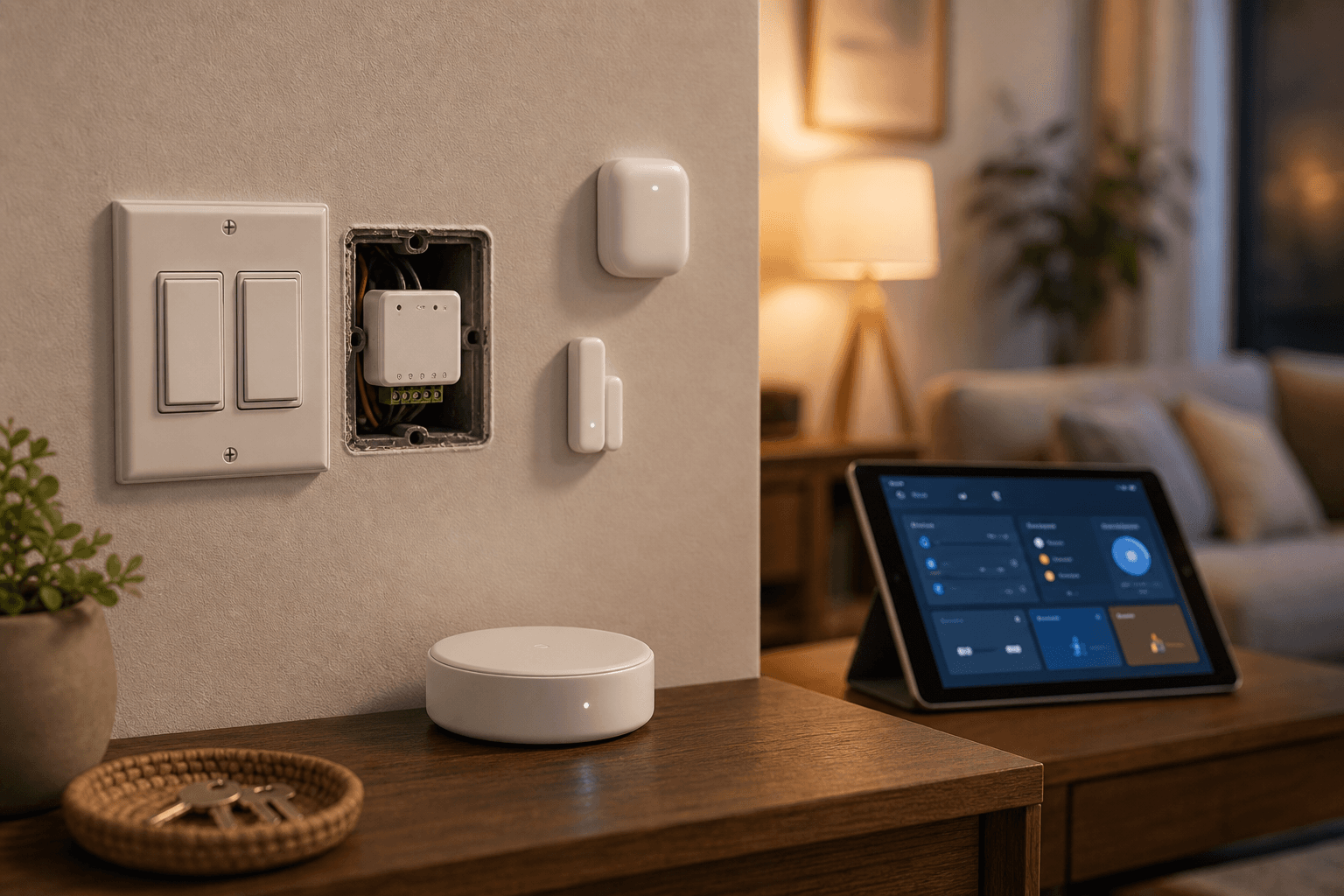
Existing homes can still be upgraded through careful device choice, wireless protocols, local hubs, and non-invasive control layers.

Existing homes

Existing homes need a different discipline: reuse current wiring where possible, avoid ugly surface fixes, choose reliable wireless only where it makes sense, and keep manual controls available for family members.

Smart power monitoring area with energy dashboard, breaker panel, EV charging cable, and household load controls

Smart Living

Smart Power

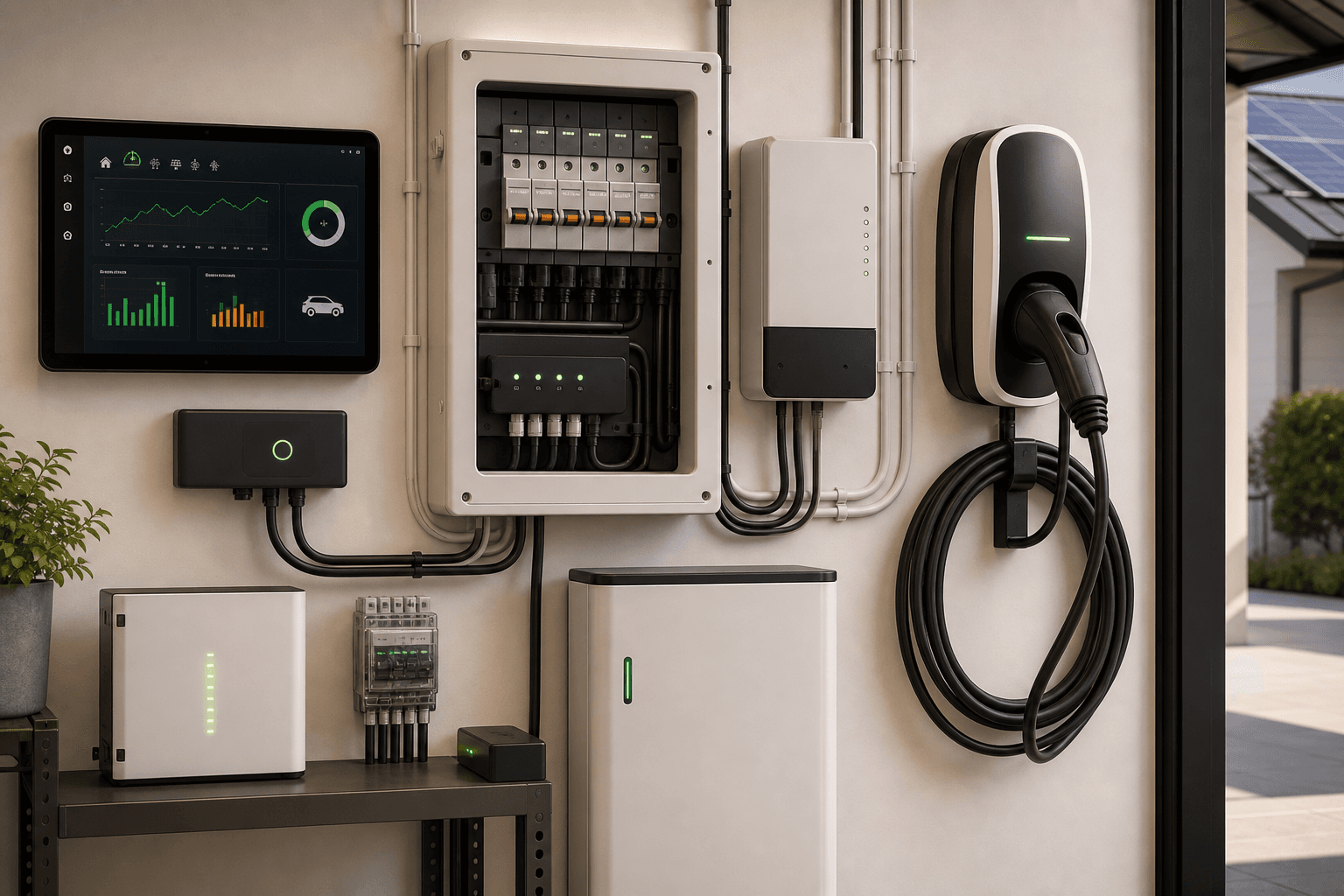
Power monitoring and control help reduce waste, understand loads, and plan EV charging intelligently.

Monitoring

Monitoring turns power, climate, services, and devices into signals that can be acted on before they become problems.

Smart EV charging

Smart EV charging is about load awareness, charging windows, solar availability, tariff timing, and not overloading the home when other heavy appliances are active.

Saving

Saving comes from visibility and automation together: finding waste, controlling standby loads, and shifting behavior without constant manual effort.

Climate automation room with thermostat, air quality sensors, humidity monitoring, airflow zones, fan, and AC controls

Smart Living

Climate Automation

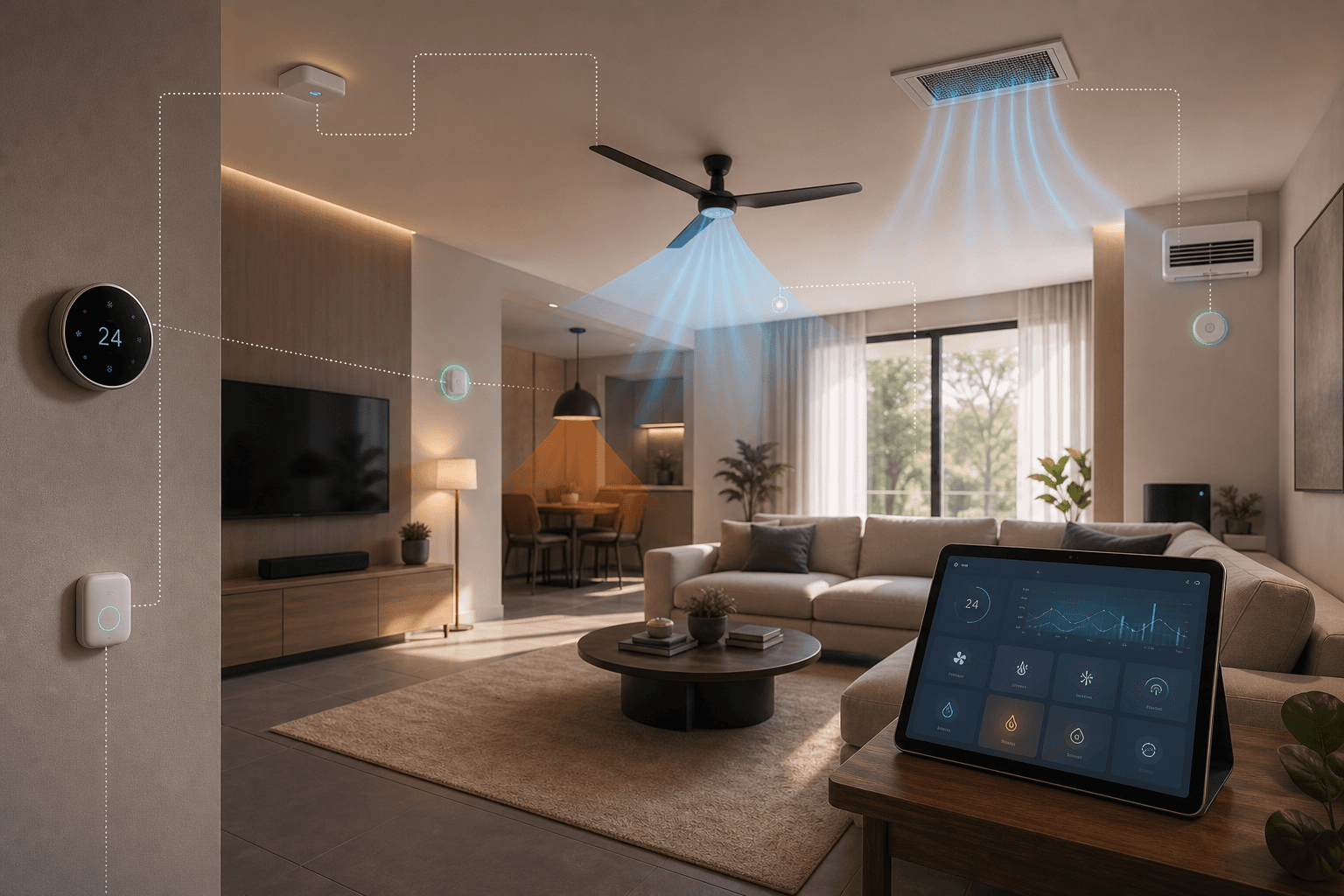
Climate control uses zones, temperature, humidity, and air quality data to decide when cooling, heating, or airflow is needed.

Zones

Zones are the basis of useful automation because every room behaves differently: heat, occupancy, light, devices, and human expectations.

Temperature

Temperature data is useful only when placed in context: room usage, sunlight, AC behavior, fan speed, and comfort patterns.

Humidity

Humidity monitoring helps with comfort, health, mold prevention, and deciding when ventilation or dehumidification is actually needed.

Air quality

Air quality brings invisible conditions into the system: CO2, particulates, VOCs, ventilation, and purifier behavior.

Fan control

Fan control is often the cheapest comfort automation: air movement can solve problems before AC or heating is needed.

AC control

AC control should balance comfort, power use, room occupancy, and cooldown timing rather than acting like a remote button.

Heating control

Heating control needs safety, scheduling, sensing, and override behavior because comfort systems must remain predictable.

Smart lighting design across stair, garden, living, kitchen, and curtain zones with coordinated automation scenes

Smart Living

Light Design, Theme & Automation

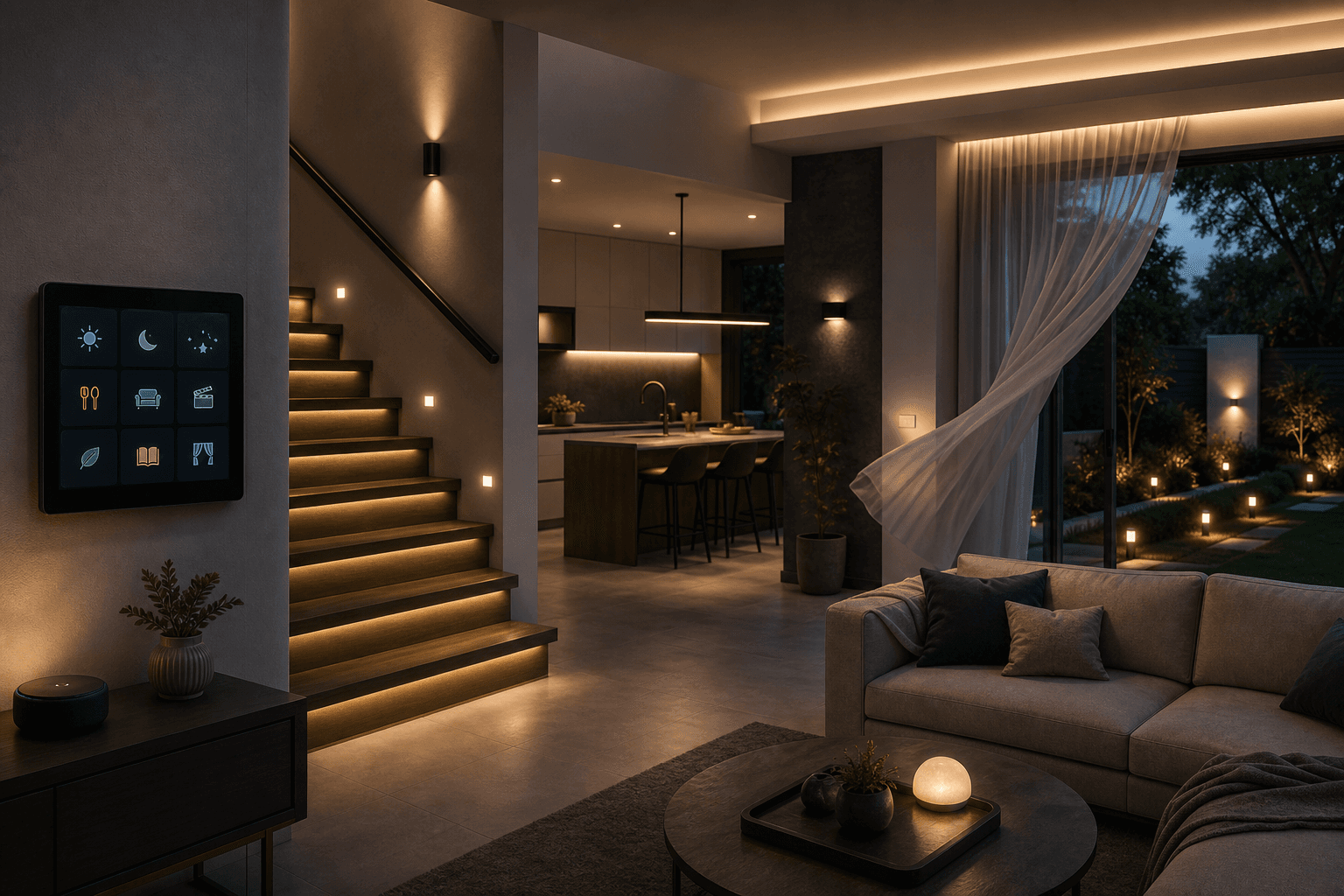
Lighting is treated as a living layer with zone design, scenes, themes, curtain controls, and behavior-aware automation.

Stair zones

Stair lighting is a safety and mood problem at once. Motion, time of day, brightness, and soft transitions matter because harsh automation on stairs feels worse than no automation.

Garden zones

Garden zones combine lighting, irrigation, outdoor sensors, cameras, and weather exposure. The build has to handle moisture, insects, range, and maintenance access.

Living zones

Living zones need scenes that match actual use: guests, TV, reading, cleaning, late-night movement, and family controls that do not require opening an engineering dashboard.

Drawing room

Drawing room automation is more presentation-sensitive: lighting, curtains, climate, and entertainment need to feel polished because guests experience this area first.

Kitchen

Kitchen automation is practical before it is fancy: task lighting, exhaust awareness, appliance loads, inventory cues, water alerts, and routines that work while hands are busy.

Scenes

Scenes combine lights, curtains, climate, media, and presence into one intent: reading, cooking, movie time, away, sleep, or guests.

Themes

Themes let the home change tone without reprogramming every device: warm evenings, task lighting, festival modes, or low-light nights.

Curtain controls

Curtain controls connect privacy, sunlight, cooling, and routines. They are simple devices with a surprisingly large impact on comfort.

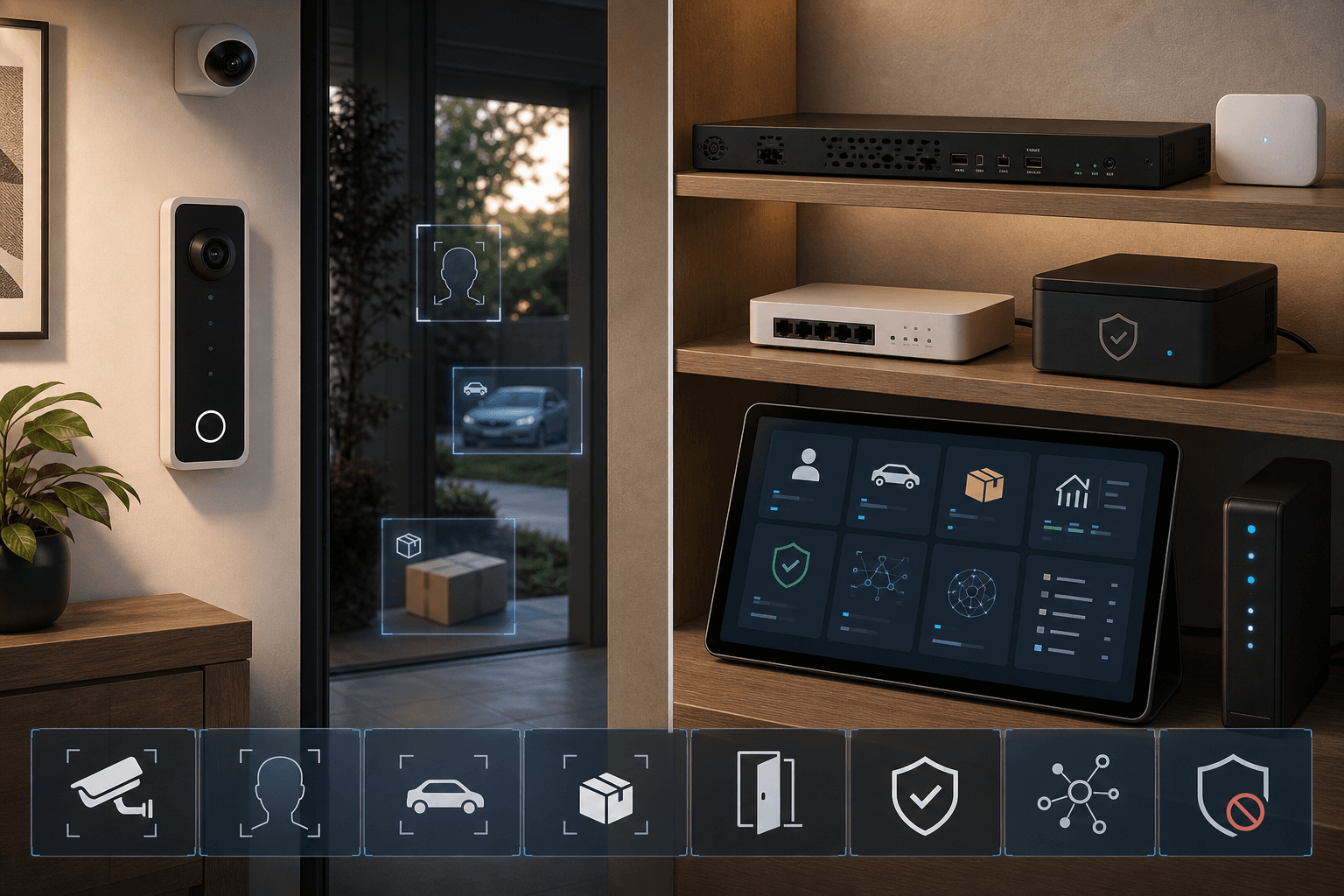
Privacy and security automation with entry access control, CCTV detection, network security appliance, and event dashboard

Smart Living

Privacy & Security Automation

Security automations combine physical access, cameras, network controls, detection events, and household privacy.

CCTV detection

CCTV detection is useful when it identifies events, not just motion. The aim is fewer false alarms and better household awareness.

Face detection

Face detection can reduce noise in alerts, but it has to be handled carefully because privacy and accuracy matter.

Object detection

Object detection helps distinguish people, vehicles, parcels, pets, and movement that actually requires attention.

Pets

Pets shape automation in practical ways: camera events, cleaning routines, climate comfort, access, and notifications.

Cars

Car detection helps with gate, parking, security, charging, and arrival routines when the home understands vehicles as known objects.

Delivery

Delivery detection is a real household workflow: notify, record, light the area, and reduce missed packages.

House help

House help routines need respectful access control, time windows, logs, and practical notifications without overcomplicating daily work.

Access control

Access control connects locks, gates, presence, cameras, schedules, and emergency overrides into one household security model.

Network security

Network security includes segmentation, device isolation, DNS filtering, firewall rules, and knowing which devices should never talk to each other.

Cyber security

Cyber security in a smart home means updates, credentials, exposure control, backups, and not trusting every cheap connected device equally.

Ad blocker

Ad blocking at the network layer improves privacy, reduces noise, and makes the household network cleaner for all devices.

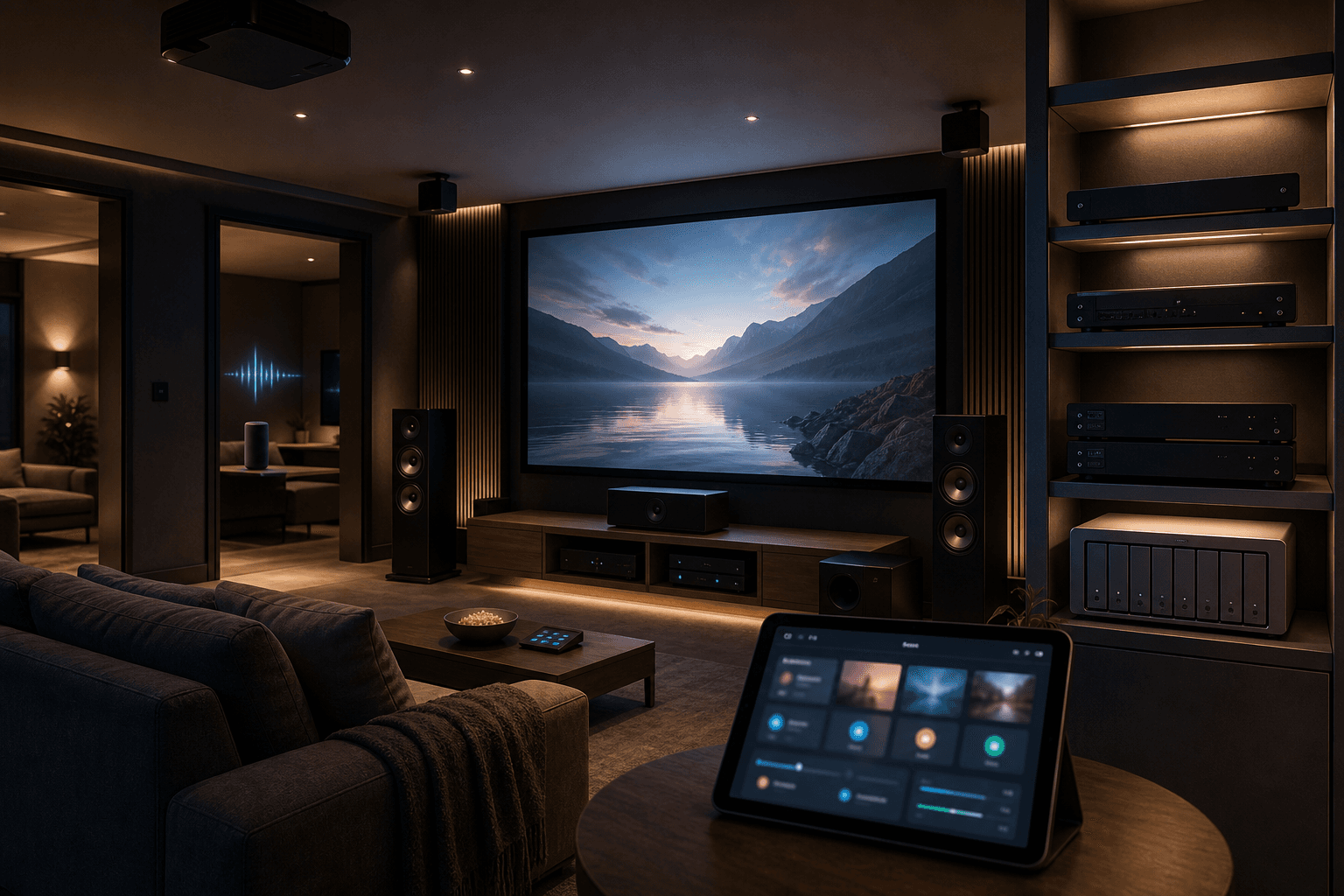
Entertainment automation room with media server, theatre lighting, streaming dashboard, speakers, and audio video zones

Smart Living

Entertainment Automation

Media libraries, in-house streaming, theatre scenes, and zone-based controls make entertainment predictable and local.

Media library management

Media library management is about metadata, storage, transcoding choices, access control, and keeping the library usable across TVs, tablets, phones, and local network conditions.

In-house streaming

In-house streaming keeps entertainment fast and independent of internet quality. Ranveer's focus is local bandwidth, client compatibility, storage layout, and smooth playback in different rooms.

Smart theatre

Smart theatre brings lighting, curtains, audio, display inputs, cooling, and media servers into one scene so the room changes mode without a checklist of remotes.

Audio and video zones

Audio and video zones make media follow the shape of the home: independent rooms, shared playback, quiet hours, and controls that are simple enough for everyone.

Smart farming and plantation setup with irrigated planters, nutrient tank, sunlight sensor, soil probes, and plant health dashboard

Smart Living

Smart Farming & Plantation

Planting systems can be monitored and automated around irrigation, nutrition, sunlight, and disease signals.

Irrigation

Irrigation automation uses soil, weather, schedules, and plant needs so watering becomes consistent without waste.

Nutrition

Nutrition tracking for plants is about timing, dose, and observation: enough support without blindly automating what should be checked.

Sunlight

Sunlight data helps decide plant placement, shade, grow-light support, and seasonal changes.

Disease control

Disease control starts with observation: leaf changes, moisture patterns, pests, and early warning before damage spreads.

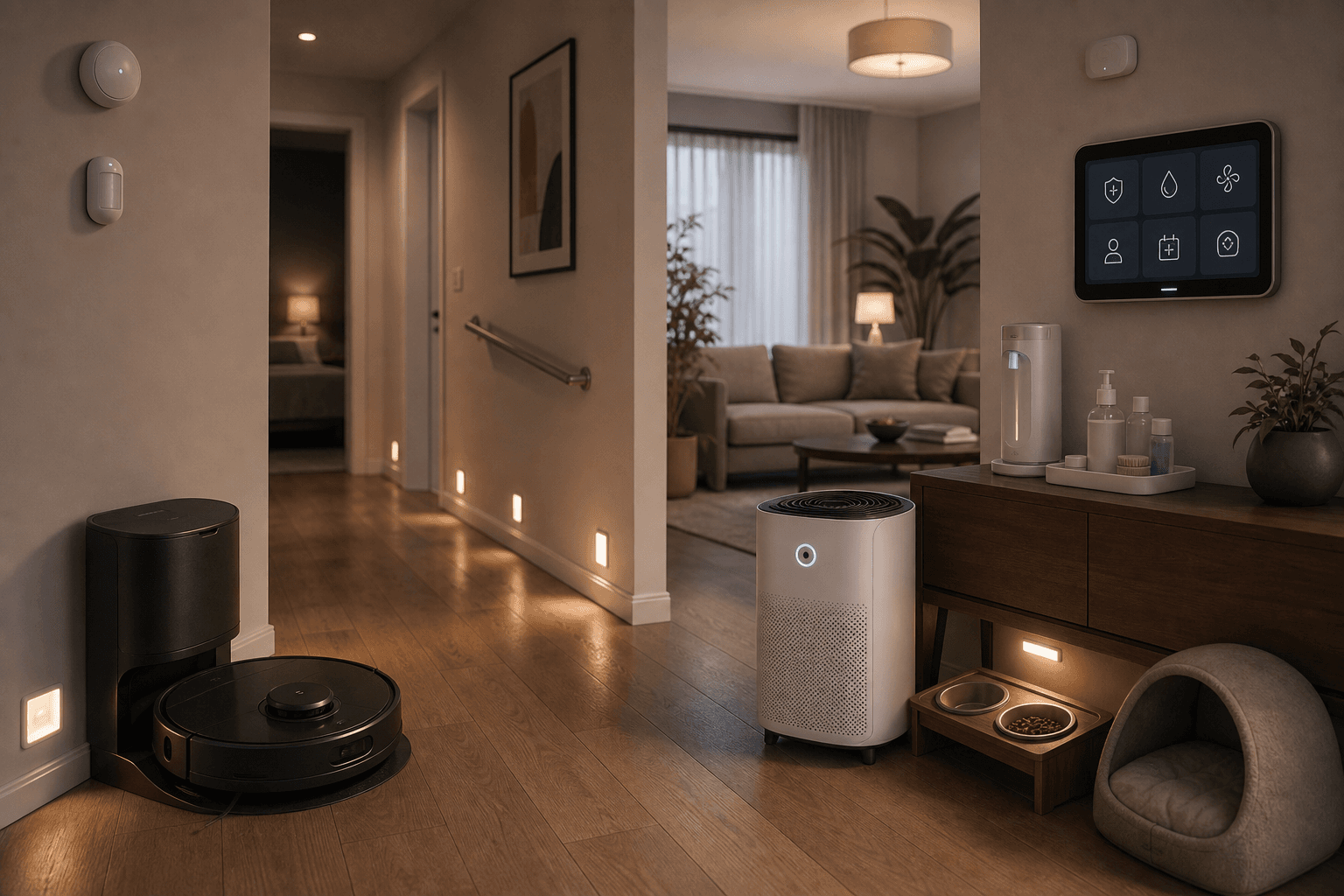
Health and hygiene automation scene with cleaning robot, air purifier, care reminders, night path lighting, and household sensors

Smart Living

Health & Hygiene

Home automation can support cleaning routines, elders, kids, pets, and care-oriented reminders without making the home feel clinical.

Cleaning robots

Cleaning robots work best when the home is mapped, scheduled, and prepared for them: zones, no-go areas, and maintenance reminders.

Elders

Elder-focused automation should be quiet and respectful: fall-aware signals, easy controls, reminders, lighting, and emergency paths.

Kids

Kid-aware automation prioritizes safety, simple controls, schedules, lighting, and visibility without making the home feel restrictive.

Pets

Pets shape automation in practical ways: camera events, cleaning routines, climate comfort, access, and notifications.

Home inventory and expenses setup with organized pantry, smart fridge sensors, stock tracking dashboard, and grocery bins

Smart Living

Home Inventory & Expenses

Daily consumption, household stock, expenses, and fridge routines can become visible through lightweight tracking and alerts.

Stocks

Stocks are household inventory in practice: what exists, what is running low, what expires, and what should not be bought twice.

Expense tracker

Expense tracking connects inventory and consumption to monthly reality, making waste and repeated purchases easier to see.

Fridge automation

Fridge automation can track reminders, expiry, grocery planning, and temperature alerts without pretending every item needs a complex database.

Area wise smart home demo with isometric home zones, sensors, lighting, climate, security, water, and power automation paths

Smart Living

Area Wise Smart Home Demo

The demo layer will present automations by area so visitors can see how the system behaves in real home zones.

Video demo

The video demo should show the system by area: what triggers, what changes, what is visible, and how someone in the home experiences it.