Self Sustainable Home

Self Sustainable Home connects power, food, water, automation, comfort, and low-friction routines. The ambition is not austerity. It is a home that feels lazy, cozy, green, and resilient.

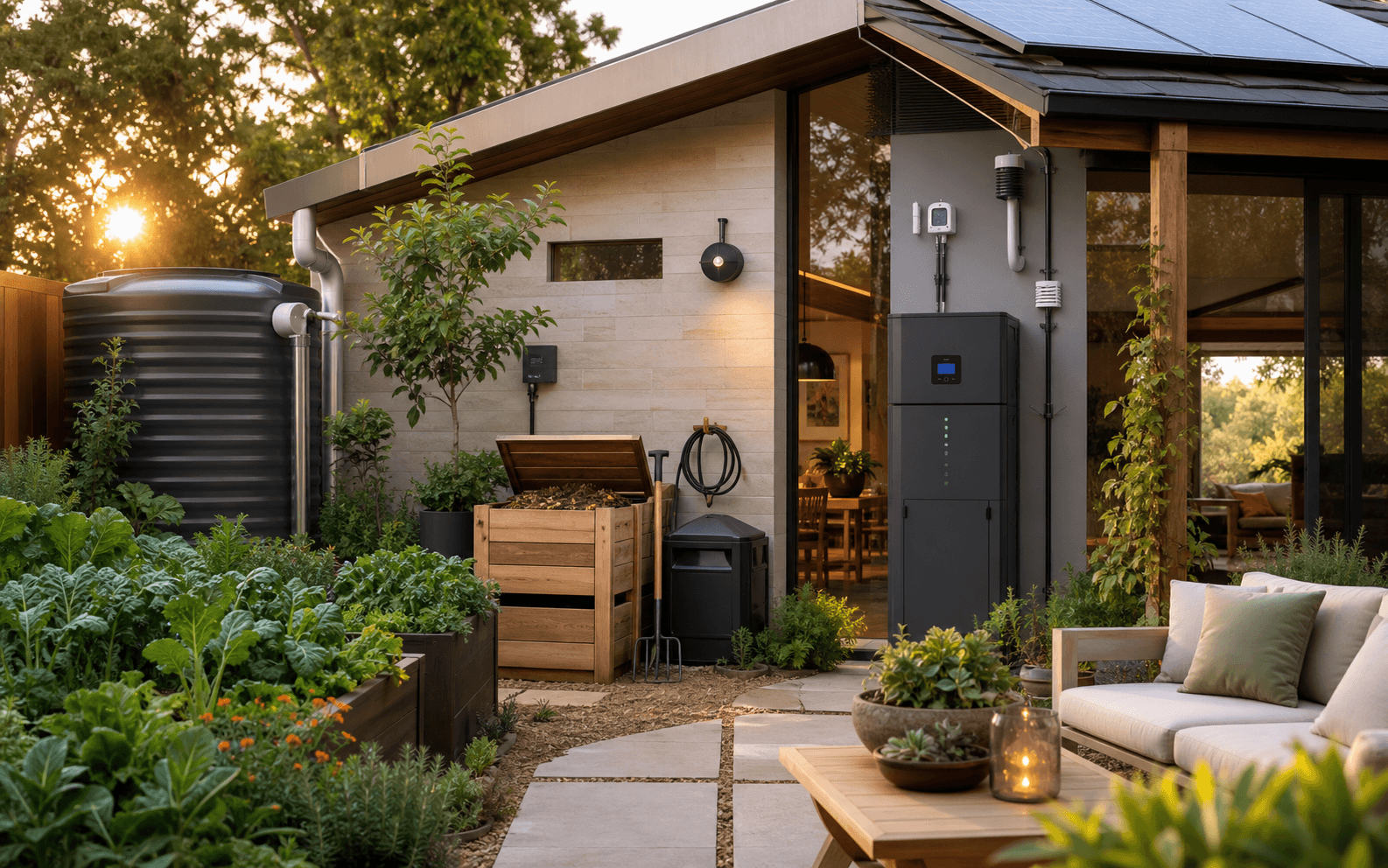
Self sustainable home courtyard with plants, rainwater storage, battery systems, sensors, and cozy living space
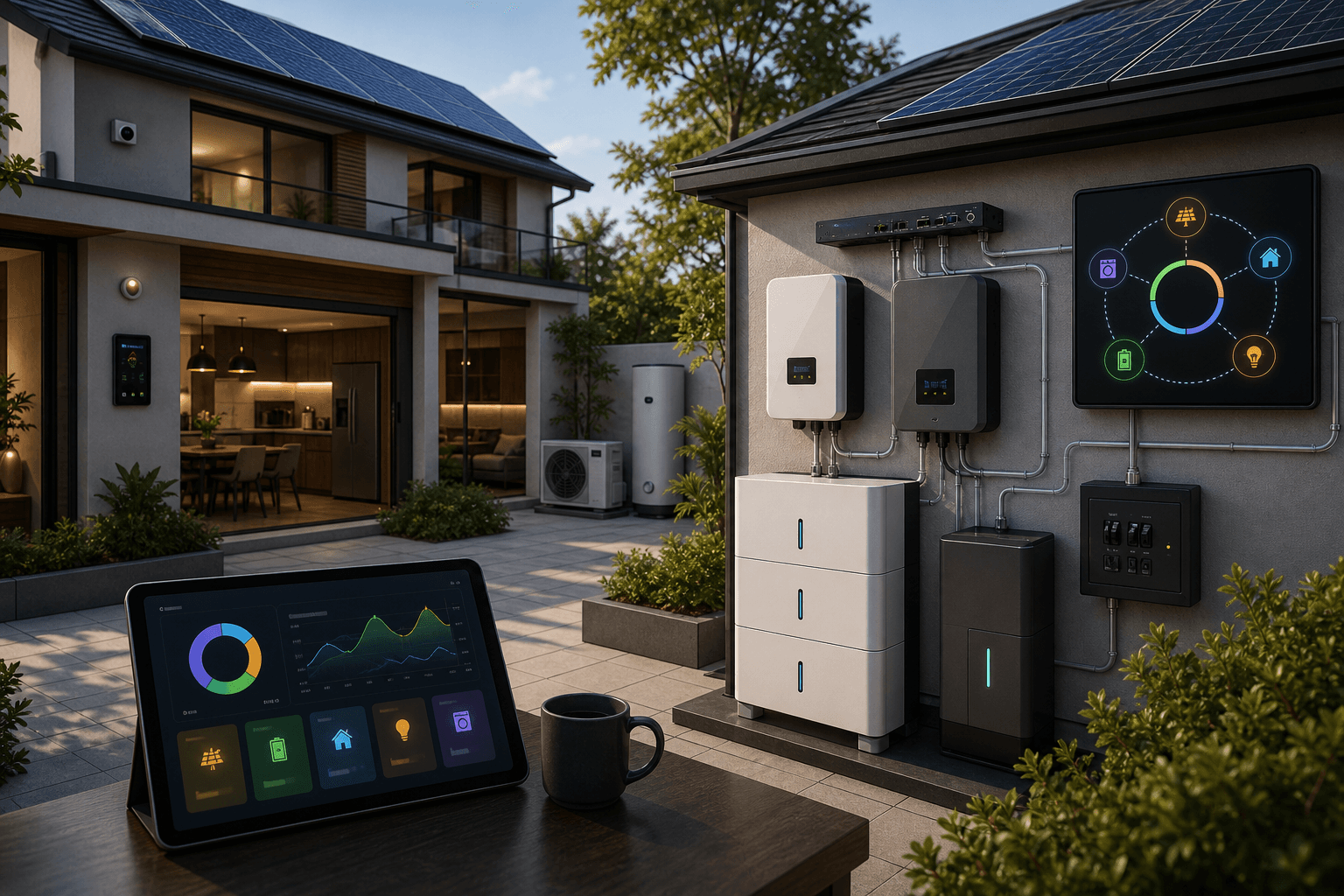
Net-zero self-sustainable home energy system with rooftop solar, battery storage, inverter equipment, monitoring, and efficiency controls

Self Sustainable Home

Net-Zero

Energy, monitoring, production, storage, and reduction work together to reduce dependence and improve resilience.

Energy balance

Energy balance is the daily math of production, storage, consumption, comfort, and backup. It shows whether a home is actually moving toward independence.

Production

Production is tracked as a living number: today, this month, seasonal trends, loss, and whether the system is behaving as expected.

Storage

Storage is treated differently depending on context: batteries for energy, tanks for water, NAS for data, and pantry space for household resilience.

Monitoring

Monitoring turns power, climate, services, and devices into signals that can be acted on before they become problems.

Efficiency

Efficiency is not only buying efficient devices. It is measuring waste, changing schedules, reducing standby loads, and making the easiest routine the lowest-waste routine.

Green home layer with plants, rainwater storage, sunlight sensors, air quality monitoring, waste reduction, and sustainable routines

Self Sustainable Home

Green Home

The green layer covers plants, water, sunlight, air, materials, and routines that reduce waste over time.

Plants

Plants make sustainability visible inside the home. The work includes watering, sunlight, nutrition, placement, and noticing when automation should support rather than replace care.

Water use

Water use becomes manageable when tanks, pumps, filters, irrigation, leaks, and daily consumption are measured instead of guessed.

Air quality

Air quality brings invisible conditions into the system: CO2, particulates, VOCs, ventilation, and purifier behavior.

Waste reduction

Waste reduction connects inventory, buying habits, composting, packaging choices, repairs, and reuse. The system should prevent waste before it becomes disposal.

Sustainable routines

Sustainable routines are small repeated defaults: when to run appliances, when to water, when to charge, when to restock, and when to alert.

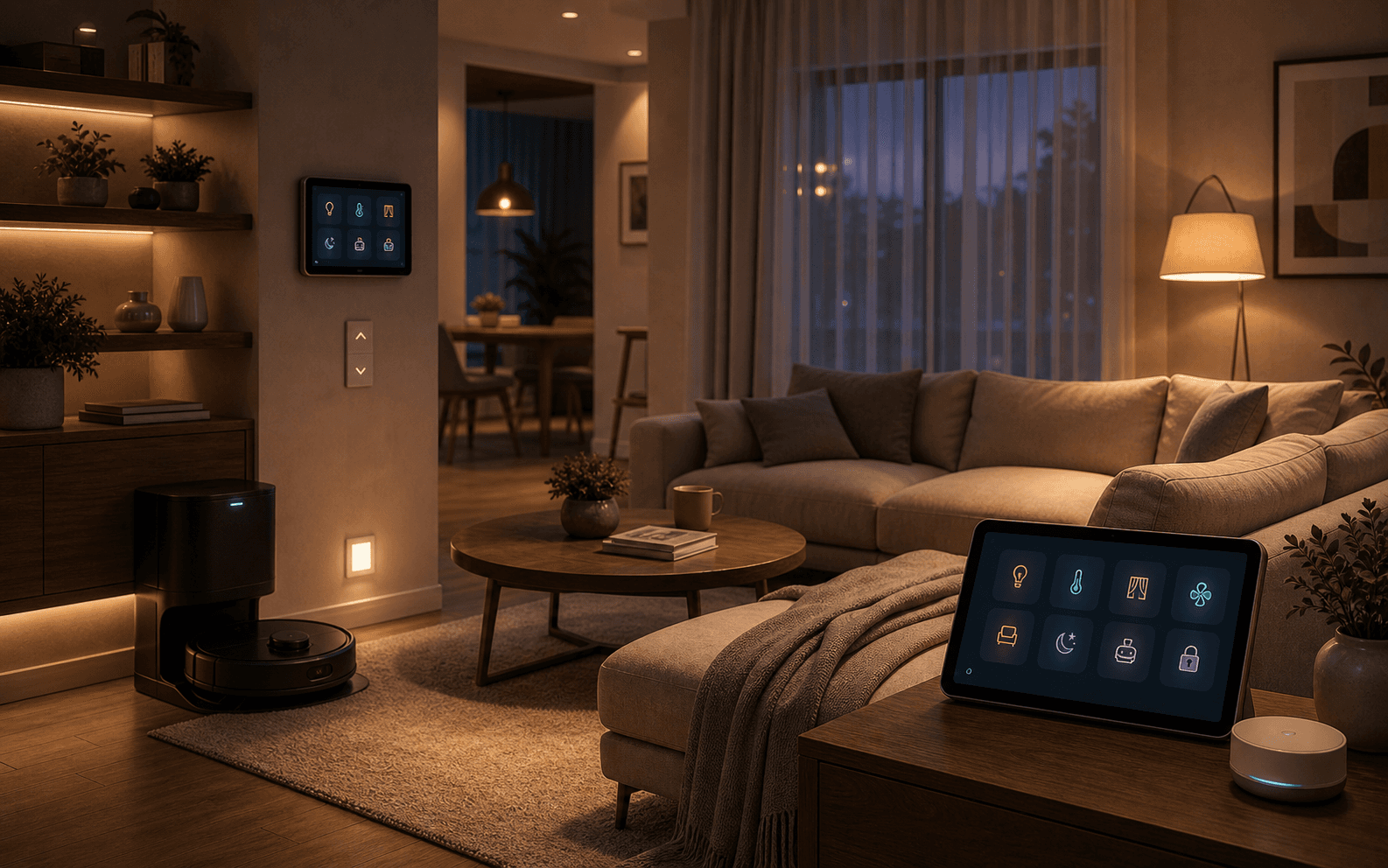
Lazy and cozy home automation scene with warm comfort lighting, curtains, cleaning robot, climate controls, and calm dashboard

Self Sustainable Home

Lazy & Cozy

Automation should reduce chores and preserve comfort without turning the home into a control room.

Comfort scenes

Comfort scenes combine light, climate, curtains, media, and quiet notifications so the home feels responsive without demanding attention.

Low-friction routines

Low-friction routines remove tiny daily decisions: night mode, away mode, cleaning prep, pump checks, plant care, and power-aware scheduling.

Household assistance

Household assistance is the practical layer: reminders, alerts, checklists, stock awareness, and automations that help people coordinate.

Calm automation

Calm automation means the home should not feel like a machine. It acts softly, exposes manual overrides, and stays quiet unless something deserves attention.