Places & Experiences

Rooms, cities, markets, cafes, workshops, and experiences that feed observation, taste, recovery, and better questions.

Cafe table with camera, notebook, coffee, maps, travel photos, connectors, and hardware market finds
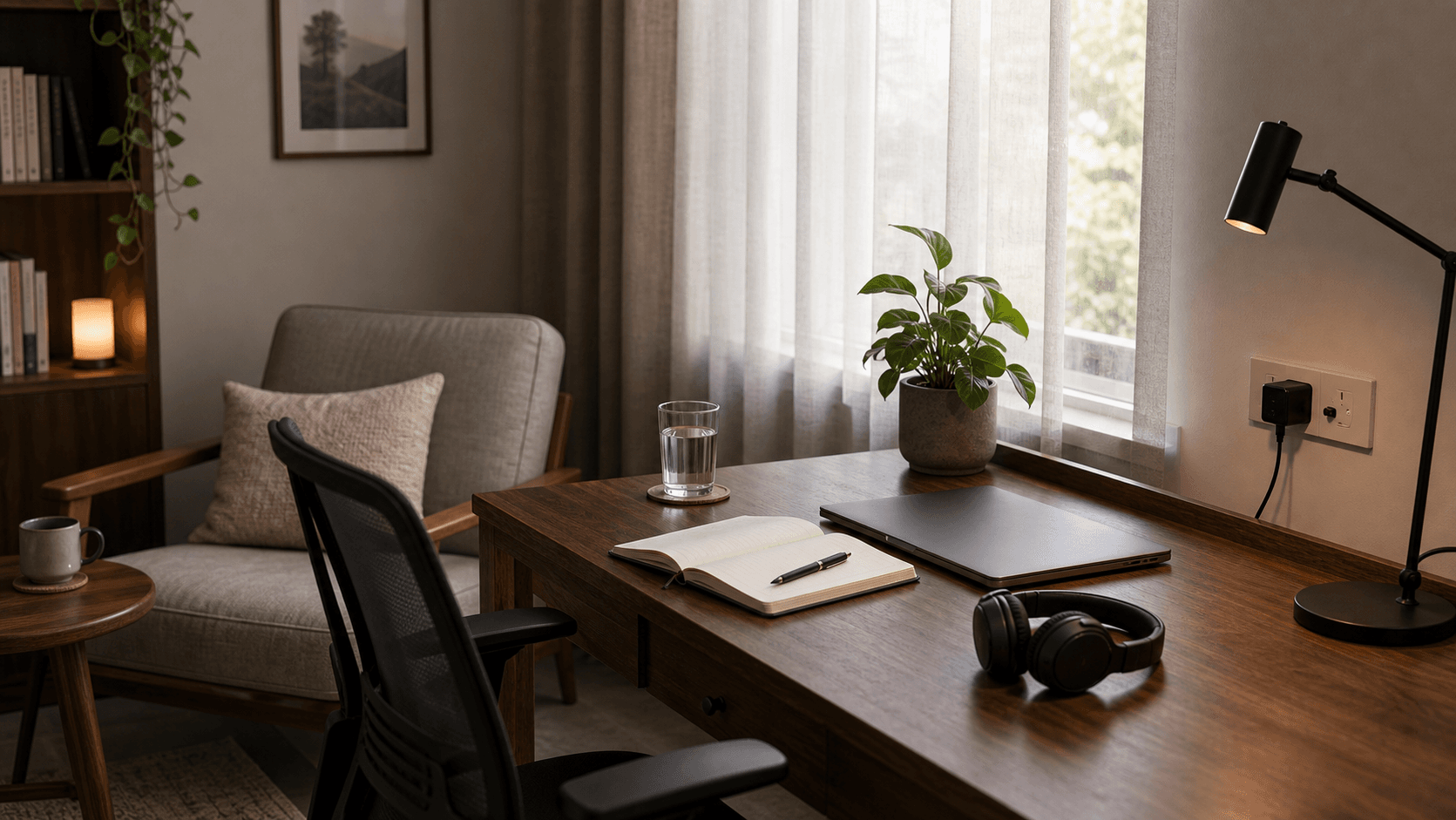
Quiet room with soft light, clear desk, notebook, laptop, headphones, water, and calm reading chair

Outside Inputs

Quiet Rooms

Quiet rooms are underrated tools. A good room changes the quality of attention: soft light, low noise, comfortable seating, reachable power, and enough visual calm to let the mind settle.

For thinking work, the room should support reading, writing, reviewing, and diagramming without constantly asking for adjustment. The best spaces make it easy to stay with one thought long enough for it to become useful.

The habit is to notice what a room is doing to the work. If the room creates distraction, the solution is not always more discipline. Sometimes it is better light, fewer devices, a cleaner surface, or a different chair.

  • Preferred room traits: natural light, low noise, comfortable chair, clear desk, reachable charging, and minimal visual clutter.
  • Useful setup for deep work: notebook, laptop, water or coffee, headphones, and only the active material visible.
  • Room reset habit: return objects, remove stale cups or papers, and leave one clear next action visible.
  • Useful output: better writing, cleaner planning, and less fatigue during long thinking sessions.
Hardware market table with connectors, cables, enclosures, tools, power supplies, and practical sourcing notes

Outside Inputs

Hardware Markets

Hardware markets are useful because they reveal the real supply chain. They show what is available, repairable, affordable, improvised, overbuilt, underbuilt, and actually used by people solving physical problems every day.

For HomeLab and smart living work, markets are a grounding mechanism. They make it easier to compare cable quality, connectors, enclosures, fasteners, power supplies, tools, sensors, and the informal knowledge that rarely appears in product pages.

The habit is to go with a list but leave room for discovery. A market visit can answer practical questions about mounting, wiring, repair, or sourcing that would otherwise stay abstract.

  • Look for cables, connectors, rack hardware, adapters, power supplies, tool bits, enclosures, labels, and sensor mounting options.
  • Ask practical questions: what fails most often, what do installers prefer, what is easy to replace, and what is not worth buying cheap.
  • Take photos and notes for dimensions, mounting patterns, part names, and price references.
  • Useful output: better procurement, fewer fragile choices, and more realistic physical implementation plans.
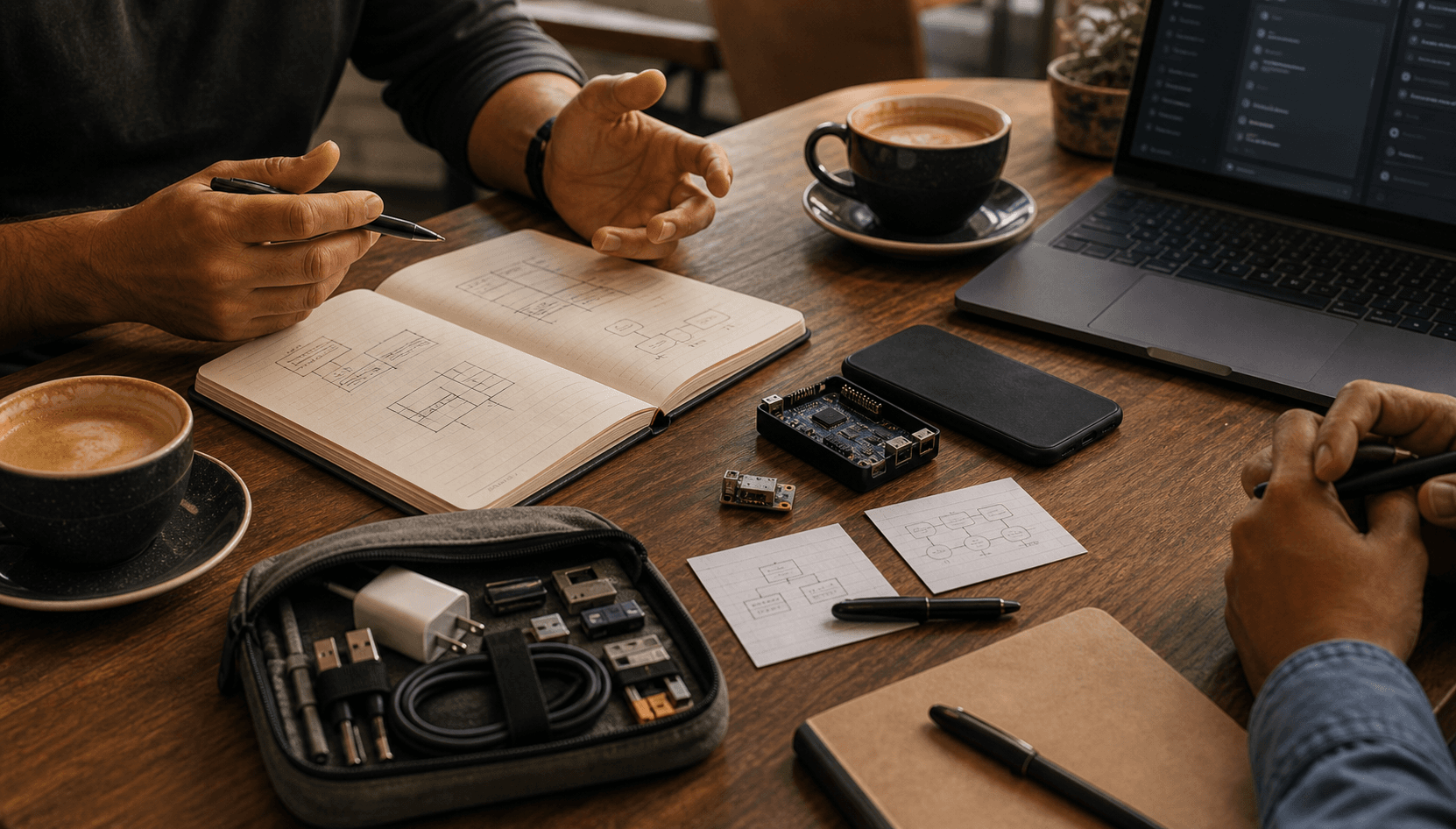
Cafe conversation table with two coffees, notebook, phone, sketches, and practical project discussion materials

Outside Inputs

Conversations

Good conversations are a learning tool because they expose operational truth. Builders, technicians, founders, designers, engineers, and homeowners often describe problems in ways documentation never will.

The useful conversations are specific. What broke? What was hard to maintain? What did users ignore? Which part looked simple but became expensive? These questions make the lesson portable.

The habit is to capture one correction from each meaningful conversation. It might be a better way to explain something, a risk that was invisible, or a practical constraint that changes the design.

  • Conversation prompts: what failed, what surprised you, what would you not repeat, and what do people misunderstand.
  • After-call note: one useful quote, one decision affected, one follow-up, and one thing to research.
  • Use conversations to test writing, speaking topics, service ideas, and smart living assumptions.
  • Useful output: sharper judgment and fewer plans built only from personal assumptions.
Slow travel table with map, small notebook, camera, train ticket shapes, charger, and local observation objects

Outside Inputs

Slow Travel

Slow travel is useful when it creates observation rather than only movement. The interesting parts are local routines, transport, utilities, food systems, neighborhoods, workspaces, and how different places solve everyday friction.

For someone who thinks in systems, travel becomes a way to notice defaults. How does a place handle water, power, access, payment, repair, waiting, hospitality, safety, and comfort? Those observations often return as better questions at home.

The habit is to collect small notes instead of trying to document everything. A few clear observations are more useful than a thousand photos with no memory attached.

  • Observe local systems: mobility, power reliability, repair culture, markets, kitchens, public spaces, and service behavior.
  • Carry a small note habit for useful details, not just scenic records.
  • Leave unscheduled time so the trip can produce discovery instead of only completion.
  • Useful output: better taste, better questions, and more grounded ideas about living systems.