
AI Initiatives

Ranveer treats AI as an engineering system, not a shortcut. The work is about creating repeatable workflows where AI helps developers move faster while standards, review, security, and architecture stay visible.

AI-assisted engineering workstation with code review, tests, workflow governance, and automation signals
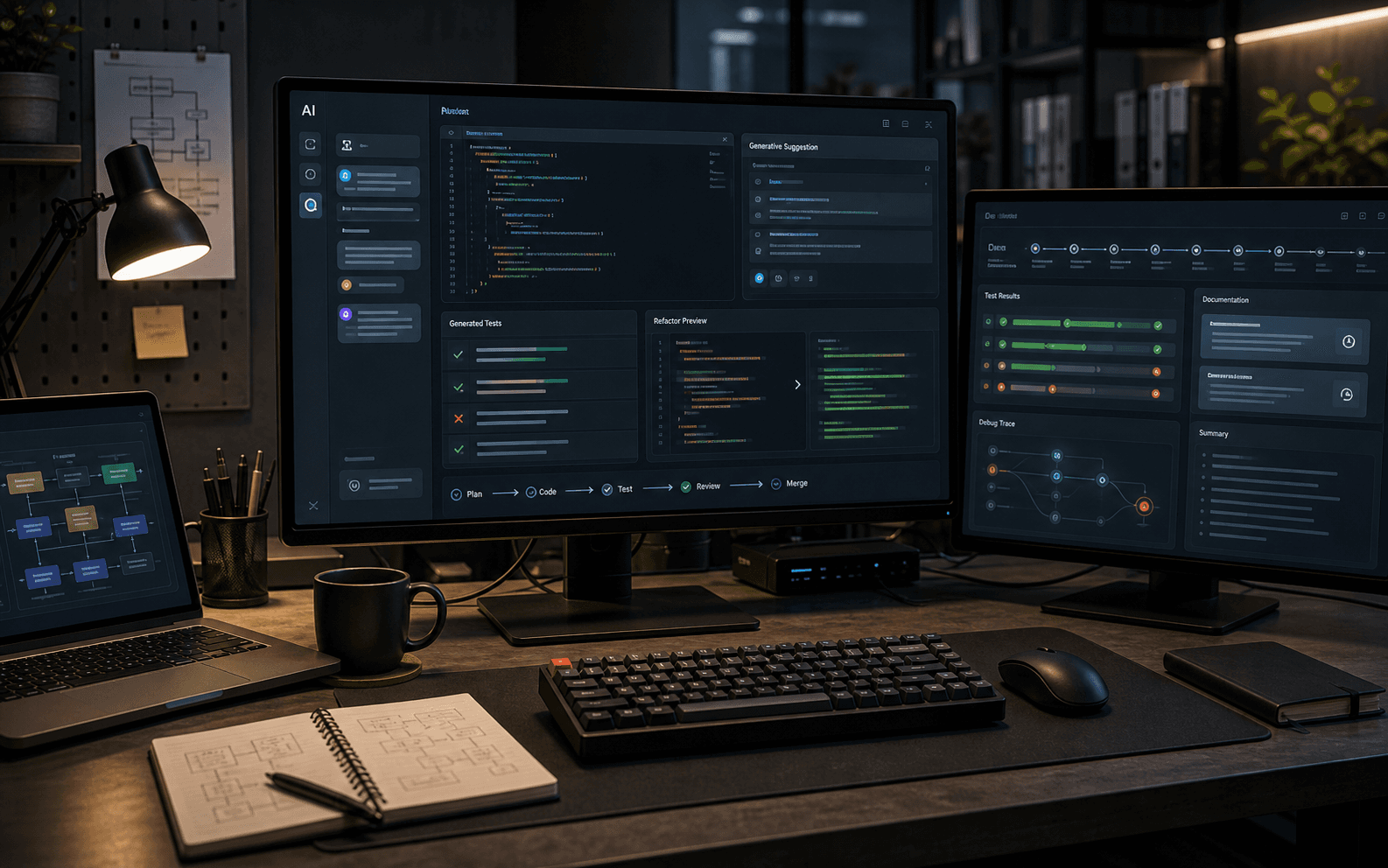
AI engineering acceleration workstation with code generation, test scaffolding, refactoring, debugging, documentation, and guarded developer workflow

AI Initiatives

Engineering Acceleration

AI assists with code generation, test scaffolding, refactoring, documentation, and debugging where the workflow has clear guardrails.

Code generation

Code generation is useful when the problem is well-framed. Ranveer uses it to accelerate boilerplate, variants, and first drafts while keeping architecture and review human-led.

Test scaffolding

Test scaffolding is one of AI's practical strengths: it can draft coverage quickly, but the important work is choosing the behaviors that actually protect the system.

Refactoring

Refactoring with AI is valuable for repetitive transformations and safer when bounded by tests, small diffs, and explicit intent.

Debugging

Debugging benefits from AI as a second reader: summarizing traces, suggesting hypotheses, and narrowing search, while real verification still happens in the code and runtime.

Documentation

Documentation is where AI can reduce drag: explaining decisions, generating usage notes, and keeping setup steps current after the actual engineering choice is made.
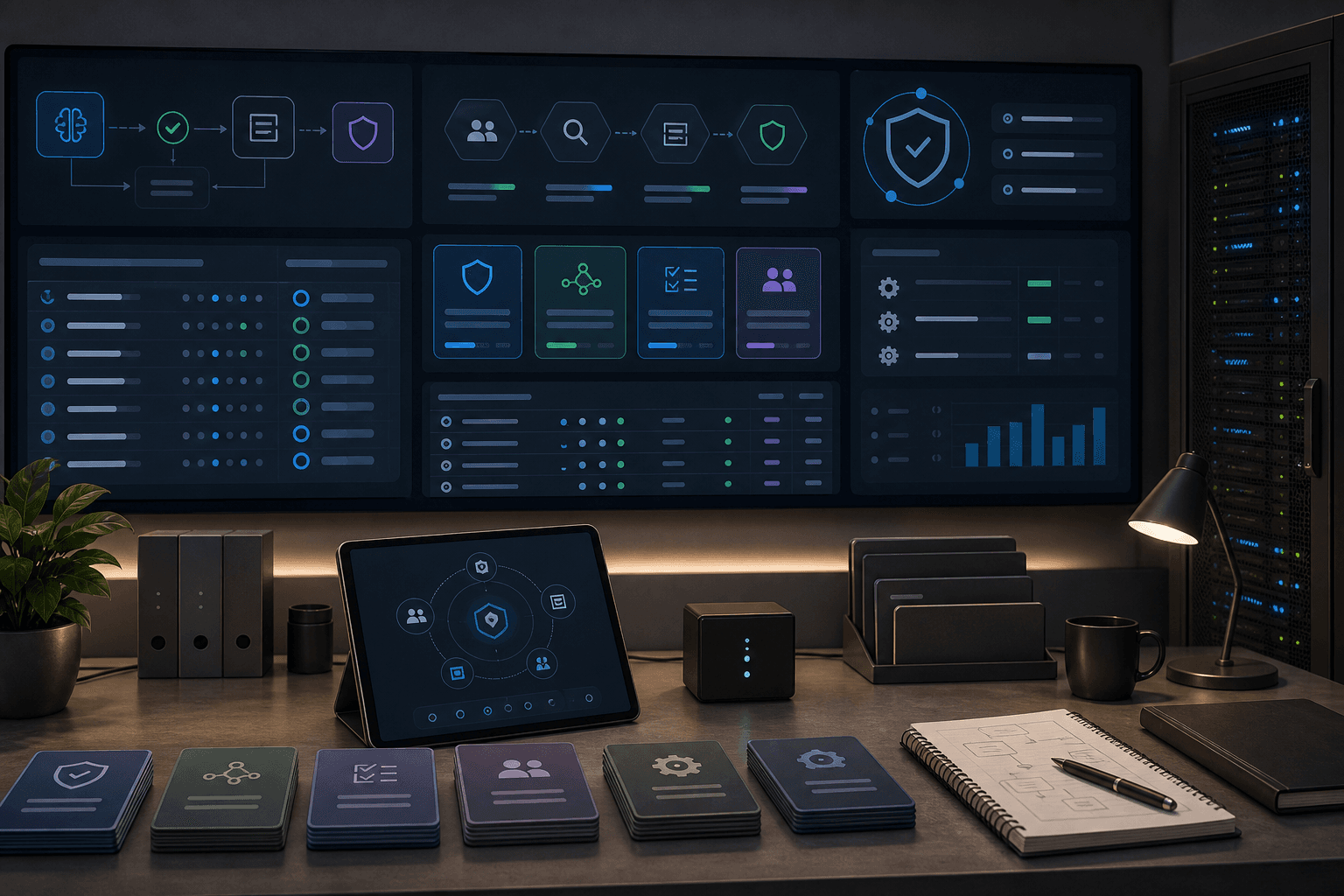

AI governance operations workspace with review loops, quality gates, security checks, prompt standards, and team enablement artifacts

AI Initiatives

Governance

AI output is governed through review patterns, quality checks, security awareness, and team-level working agreements.

Review loops

Review loops prevent AI work from becoming unchecked output. Ranveer treats generated code like junior code: useful, fast, and still needing standards.

Quality checks

Quality checks include tests, linting, architecture review, accessibility, performance, and whether the generated answer actually fits the local codebase.

Security checks

Security checks matter more with AI because plausible code can hide exposure, unsafe defaults, leaked secrets, or weak validation.

Prompt standards

Prompt standards make AI work repeatable across a team: context, constraints, examples, acceptance criteria, and explicit review expectations.

Team enablement

Team enablement is about helping engineers use AI without losing fundamentals: reading code, understanding tradeoffs, and owning the result.

AI decision support workspace with architecture options, risk review, context summaries, dependency maps, and tradeoff analysis

AI Initiatives

Decision Support

AI is used to compare options, surface risks, summarize context, and reduce cognitive load without removing human judgment.

Architecture options

Architecture options are compared with AI to expose tradeoffs faster, but final decisions still depend on product constraints, team capability, and long-term maintenance.

Risk review

Risk review uses AI to surface failure modes, hidden coupling, migration issues, and security concerns before implementation starts.

Context summaries

Context summaries reduce ramp-up time across long threads, docs, tickets, and code areas, especially when decisions are spread across many places.

Tradeoff analysis

Tradeoff analysis is useful when AI is asked to compare cost, complexity, delivery speed, reversibility, and operational risk instead of simply recommending a tool.