Living Notes

Personal rhythms around health, home, food, plants, reset time, and small routines that make the technical work sustainable.

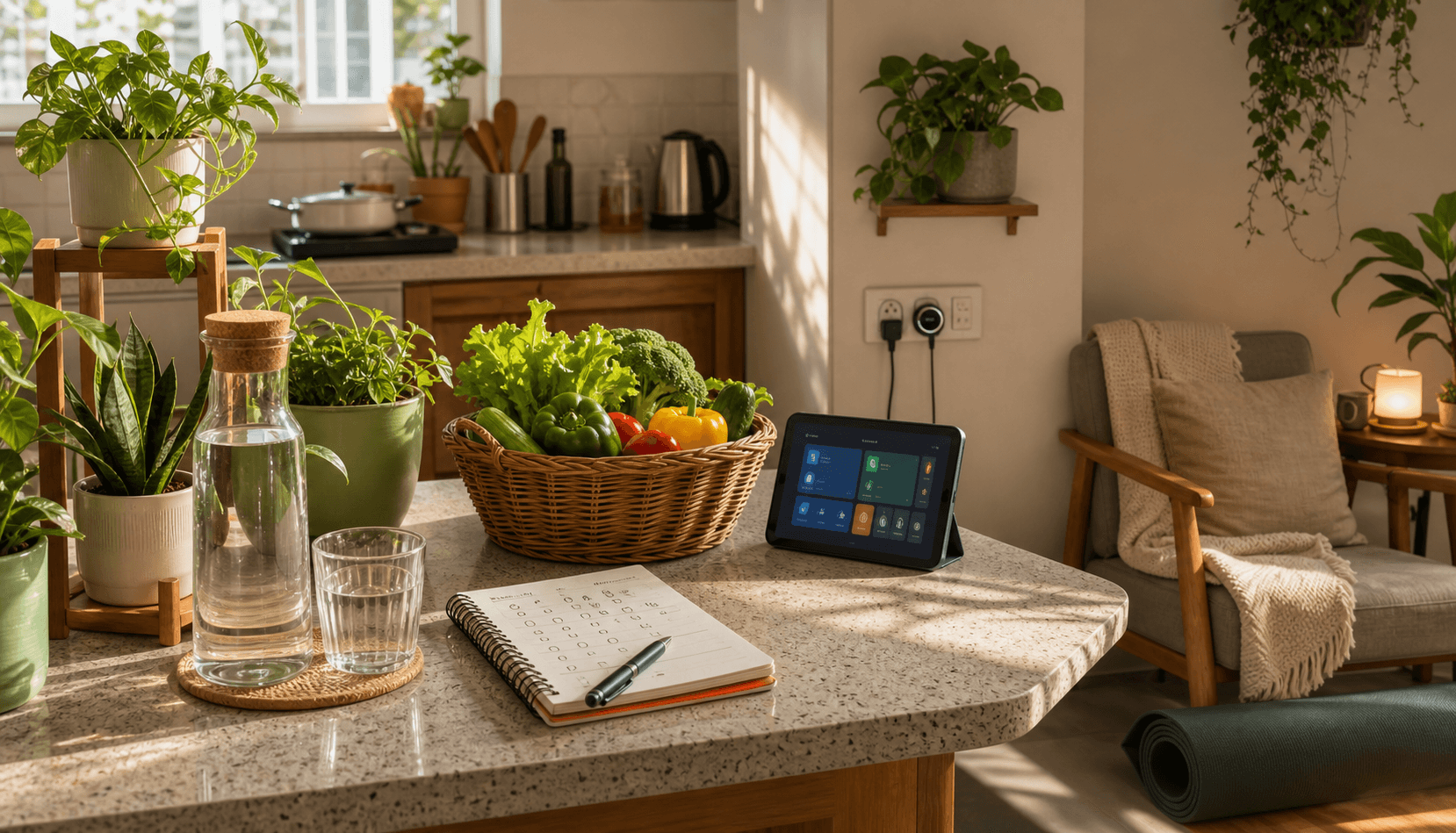
Calm home interior with plants, kitchen counter, groceries, notebook, water carafe, books, and recovery corner
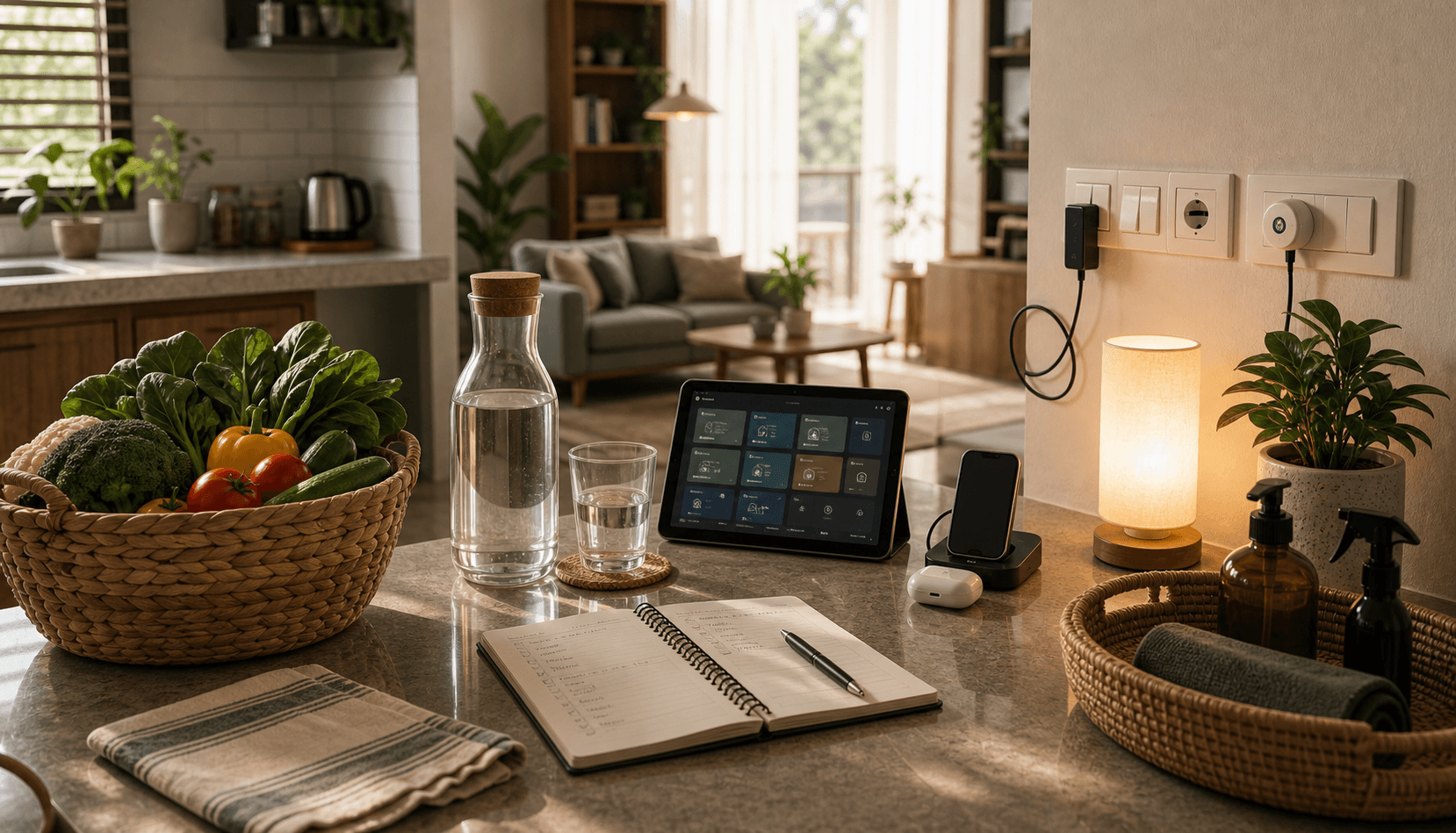
Home rhythm dashboard scene with kitchen counter, water carafe, groceries, lighting, charging station, and notebook

Personal Side

Home Rhythms

The home works better when routines are visible. Water, power, lighting, cleaning, groceries, climate, and quiet time all have patterns. Once those patterns are noticed, some can be automated and some simply need a better habit.

The useful approach is not to automate everything. It is to identify what repeats, what causes friction, what creates waste, and what needs attention before it becomes a disruption.

This is where personal life and systems thinking meet. A home can be calm without being passive, and intelligent without demanding constant management.

  • Track recurring household flows: water tank behavior, pump timing, power usage, cleaning rhythms, groceries, and comfort settings.
  • Use dashboards or notes where visibility matters, and simple routines where automation would be unnecessary.
  • Keep manual overrides for household systems so convenience never removes control.
  • Useful output: fewer surprises, calmer routines, and better decisions about what should be automated.
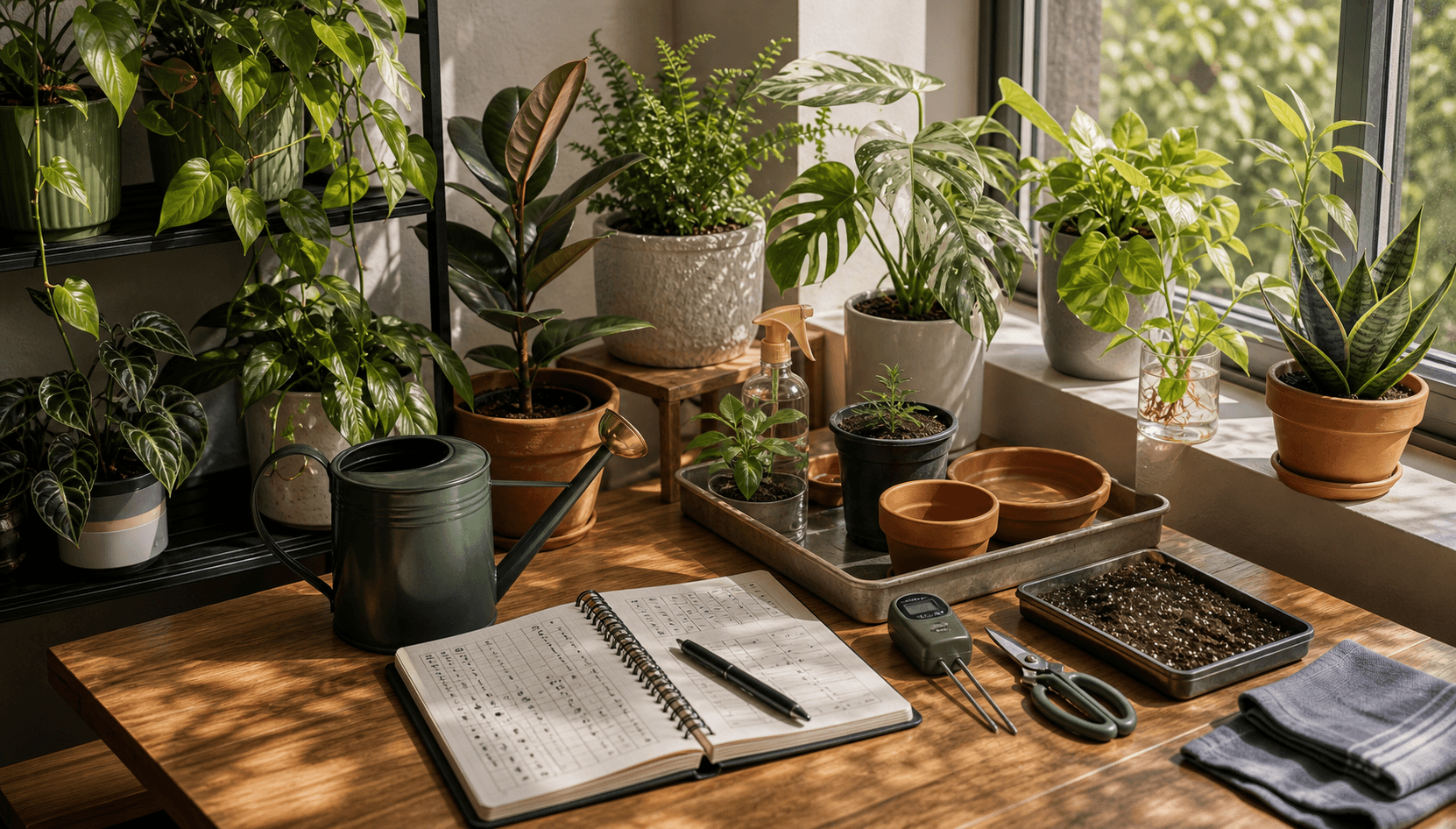
Indoor plant care setup with grouped plants, watering can, soil moisture tools, sunlight, and care notebook

Personal Side

Plants & Care

Plants are a patient systems lesson. They respond to light, water, soil, heat, attention, neglect, and timing. They also reveal that not every problem gets better with more intervention.

The care habit is observation first: leaf behavior, soil dryness, sunlight, drainage, and the difference between a plant needing help and a plant simply adjusting. This is surprisingly close to infrastructure thinking.

Automation can help with reminders or irrigation, but the useful part is still awareness. A plant does not need a dashboard as much as it needs consistent care and a good environment.

  • Observe light, watering frequency, soil moisture, drainage, and seasonal changes before adding automation.
  • Use simple reminders or logs for plants that need predictable care.
  • Group plants by light and water needs rather than by how they look on day one.
  • Useful output: healthier plants and a slower, more observant rhythm inside the home.
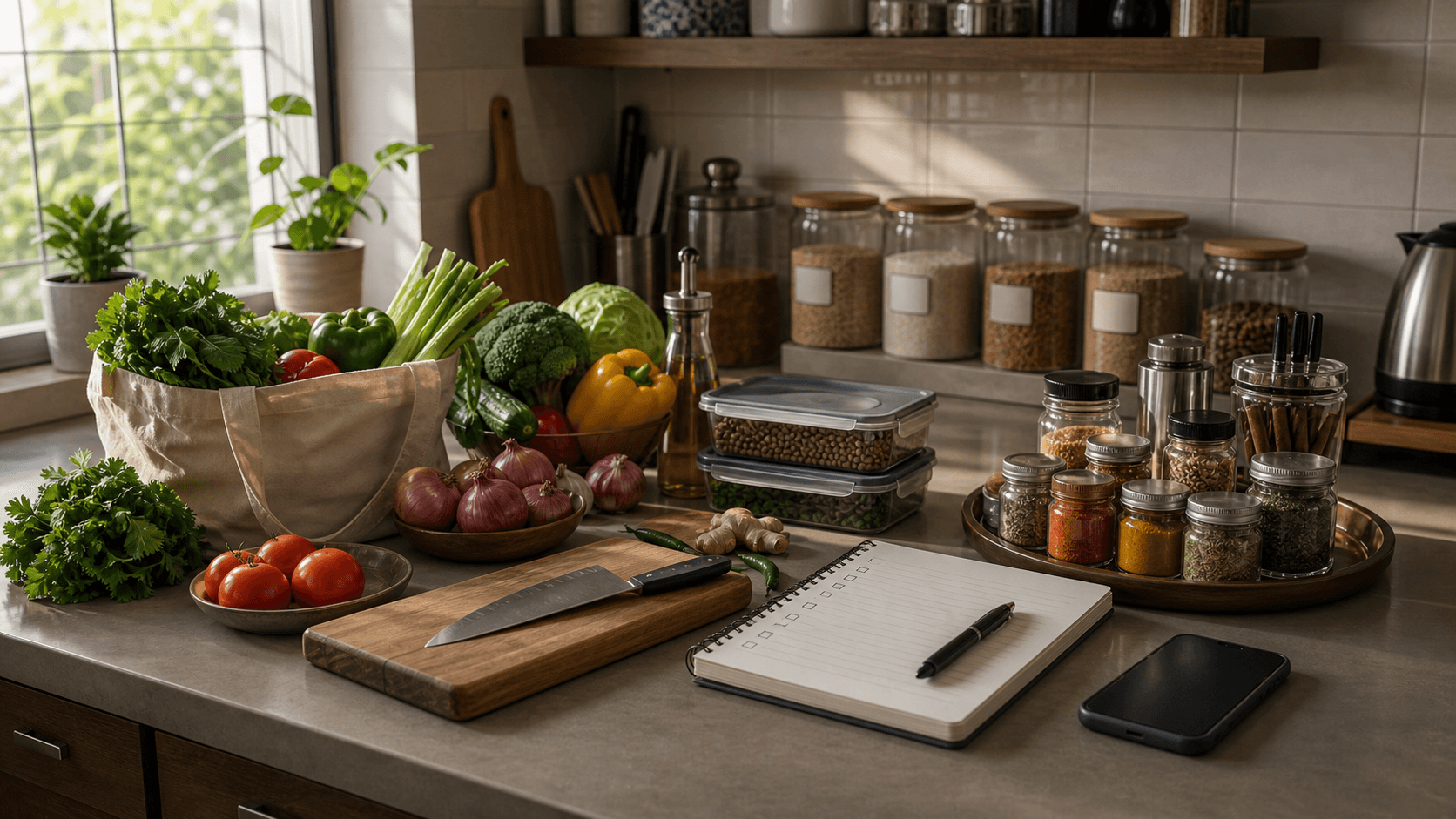
Organized kitchen counter with vegetables, pantry jars, shopping list, clean prep surface, and warm morning light

Personal Side

Food & Kitchen

The kitchen is a practical system: inventory, preparation, storage, hygiene, timing, energy use, and family routines. Small improvements here have disproportionate daily value.

The useful habit is to reduce uncertainty. Know what is available, what needs to be used soon, what should be restocked, and what routine makes cooking or ordering less chaotic.

This connects naturally to home inventory thinking. A kitchen does not need to become a spreadsheet, but it benefits from a light system for staples, perishables, cleaning supplies, and repeated purchases.

  • Simple inventory habit for staples, frequently used items, cleaning supplies, and perishables.
  • Weekly reset: clear expired items, plan obvious meals, restock basics, and clean the work surface.
  • Use reminders or a shared list for repeated purchases instead of relying on memory.
  • Useful output: less waste, faster decisions, and fewer last-minute household interruptions.
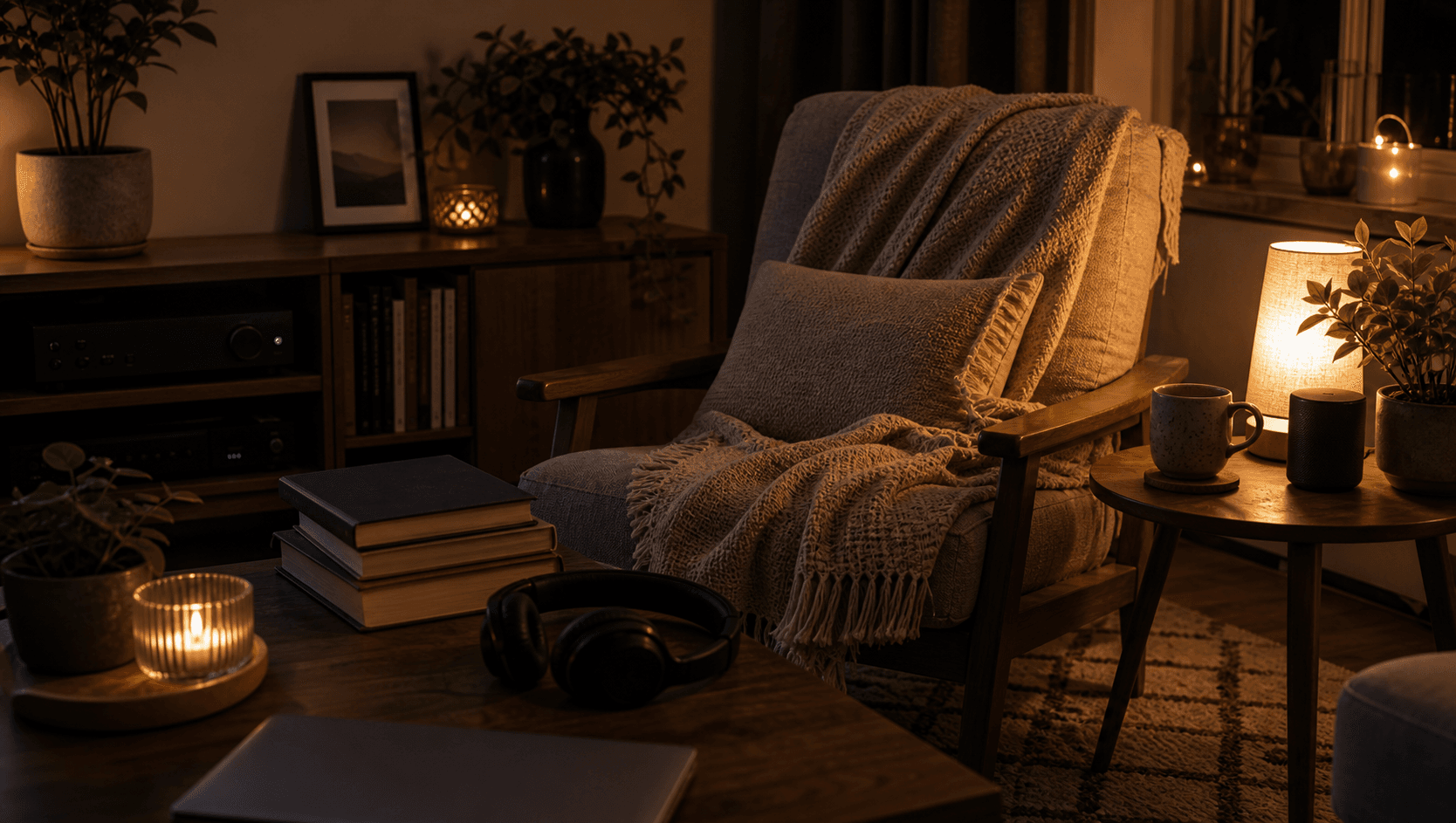
Quiet recovery corner with soft chair, books, music, warm lamp, plants, and low-demand evening atmosphere

Personal Side

Recovery

Good systems include rest. If every space and routine is optimized only for output, the system eventually becomes brittle. Recovery is not the opposite of productivity; it is how productivity stays humane.

The recovery habit is to make some time and space intentionally low-demand: no dashboard, no open loop, no performance metric. Reading, walking, quiet rooms, family time, music, and slow maintenance all count.

This is also a design principle. A home should not feel like a control room all the time. The best systems fade into the background when they are not needed.

  • Protect quiet blocks for reading, family time, walking, music, or simply doing nothing productive.
  • Use automation to reduce background friction, not to turn every habit into a measured event.
  • Keep some spaces intentionally screen-light and low notification.
  • Useful output: more sustainable work, better attention, and a home that still feels like a home.