Home Lab

The Home Lab work is where Ranveer turns infrastructure ideas into operating systems: local services, custom routing, resilient storage, virtualization, observability, and secure access. The focus is useful capability without unnecessary spend.

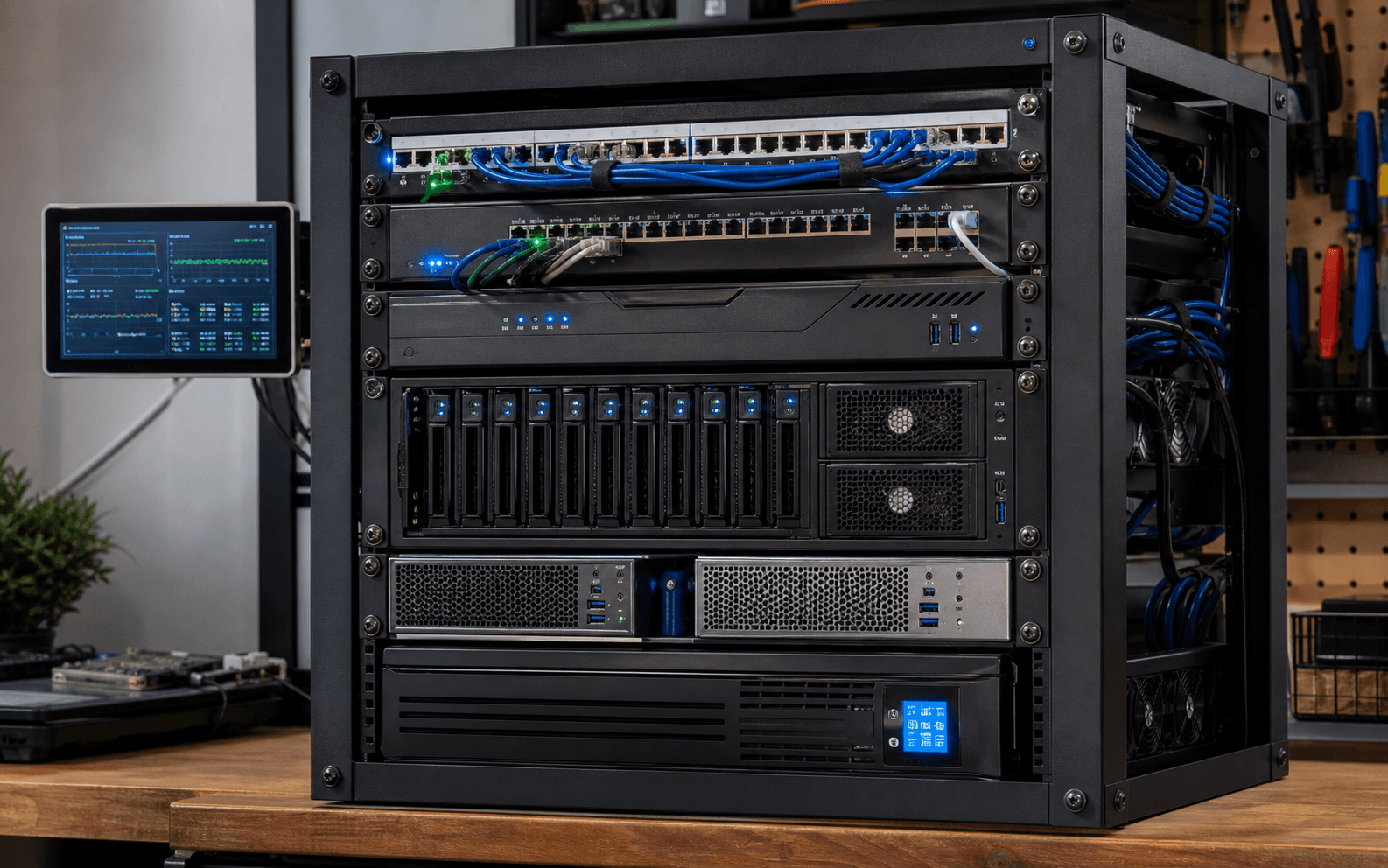
Compact private cloud home lab rack with servers, storage, networking, UPS, and monitoring
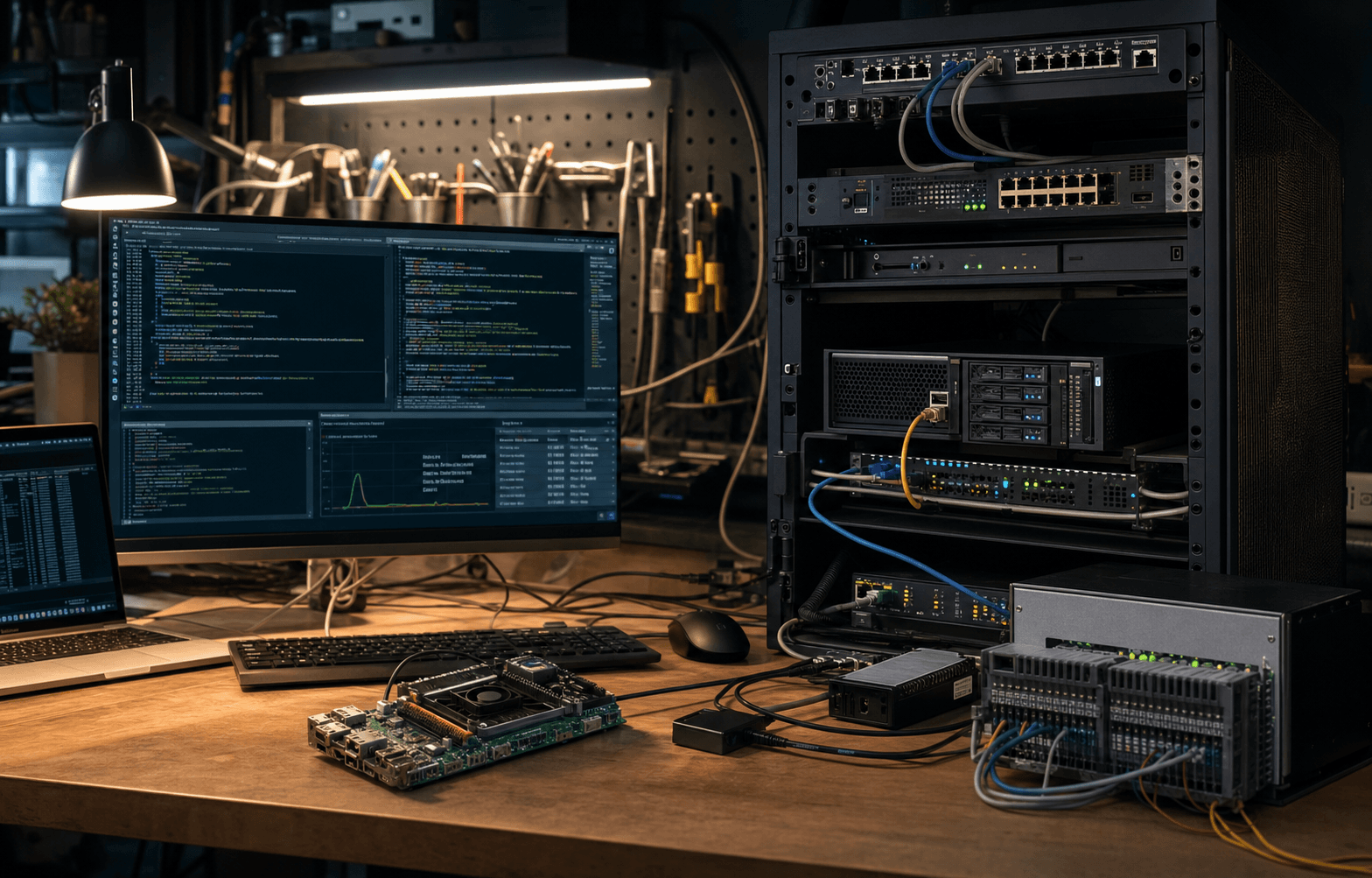
Self-hosting engineering workbench with service dashboards, network gear, and deployment notes

Home Lab

Self Hosting

Private services are exposed and operated with controlled access, secure routing, and uptime-minded deployment patterns.

Cloudflare

Cloudflare is useful at the edge of the home lab: DNS, tunnels, access rules, and protection for selected services. The important part is deciding what should be public, what should stay private, and how recovery works when an external dependency is down.

Traefik

Traefik helps route self-hosted services cleanly with labels, certificates, and repeatable service discovery. In practice it becomes the front door for experiments, dashboards, and internal tools without hand-editing every route.

Zero downtime

Zero downtime is approached through redundancy, staged updates, health checks, backups, and rollback paths. The goal is not perfection; it is avoiding avoidable disruption when the home lab is serving real household workflows.

Security-first access

Security-first access means private-by-default services, strong authentication, narrow exposure, and separate paths for admin work. Convenience is allowed only after the access model is clear.
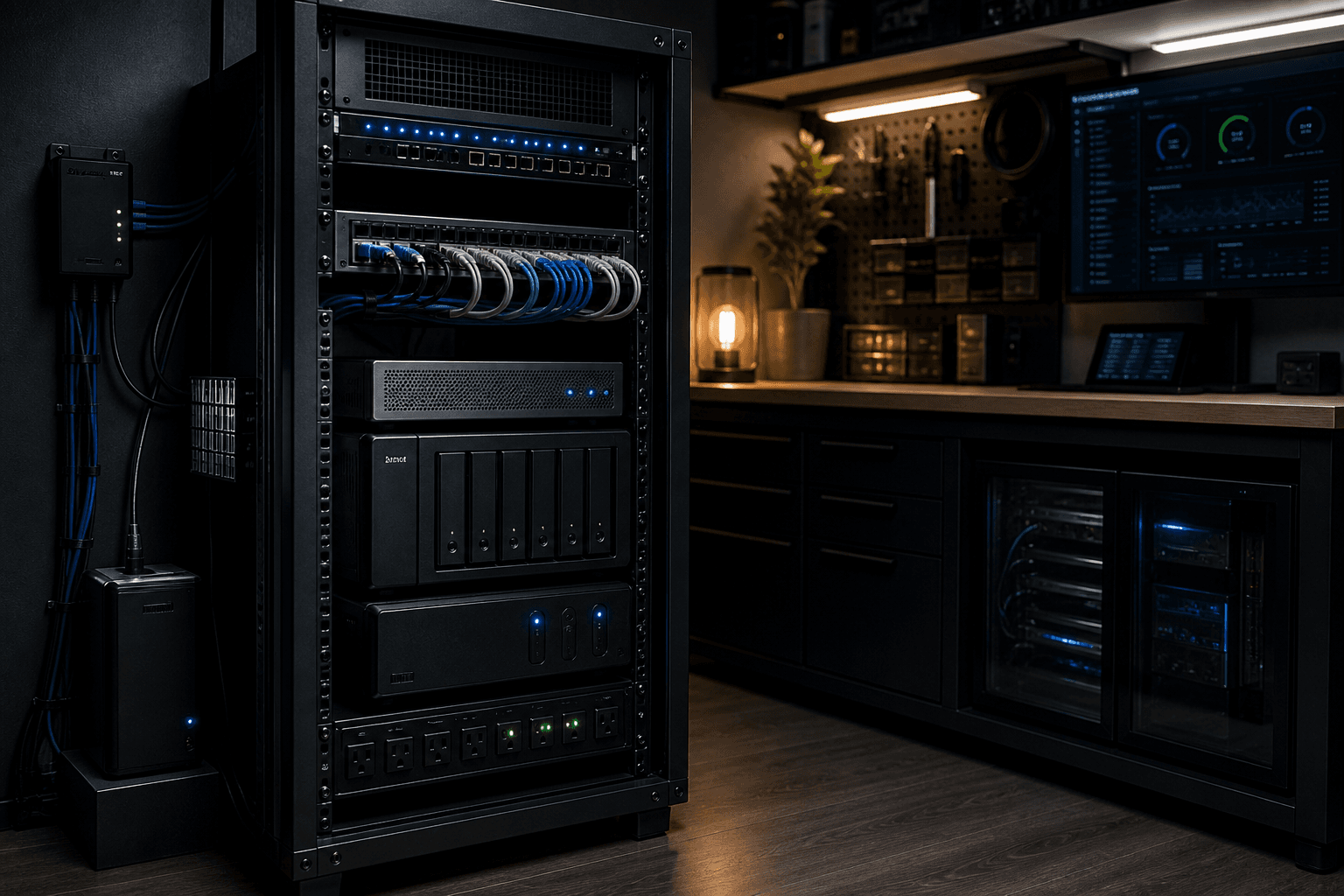
Compact home lab server rack with network switches, storage, power, and labeled cabling

Home Lab

Rack Build

Rack design covers open racks, custom enclosures, closed racks, power planning, airflow, and maintenance access.

Open rack

Open racks make iteration easy while a build is still changing. They expose heat, cable paths, physical access, and failure points, which is valuable before the system is enclosed.

Custom rack

Custom racks are for fitting the system to real space, power, airflow, and maintenance constraints. The build has to work in the home, not just look good in a diagram.

Closed rack

Closed racks become useful when dust, safety, sound, and physical protection matter. The tradeoff is that airflow and maintenance access must be designed more carefully.

Power management

Power management covers UPS planning, adapter cleanup, labeled circuits, graceful shutdown, and knowing which devices are critical. A reliable lab starts with boring electrical clarity.

Zero downtime

Zero downtime is approached through redundancy, staged updates, health checks, backups, and rollback paths. The goal is not perfection; it is avoiding avoidable disruption when the home lab is serving real household workflows.

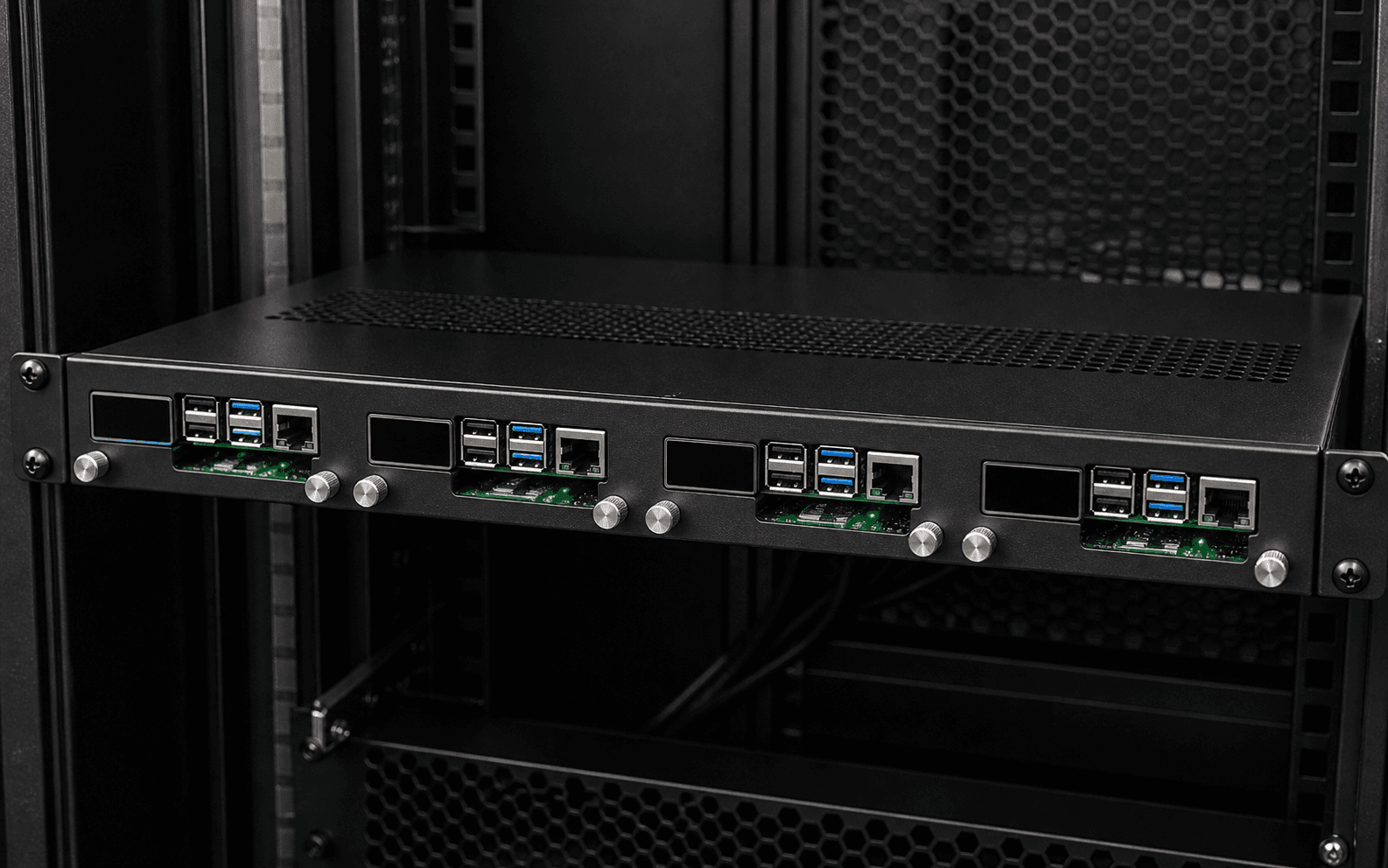
Rack-mounted Raspberry Pi-style home lab cluster with compact single-board computers and network ports

Home Lab

SBC & Cost Efficiency

Small board computers are used where they make sense: low power, PoE-ready, inexpensive, and powerful enough for edge workloads.

Raspberry Pi rack nodes

Raspberry Pi nodes are useful for lightweight services, edge tasks, monitoring, and experiments where low power matters more than raw compute.

Other SBCs

Other SBCs are chosen when the workload needs better networking, storage, GPU support, or thermals than a Raspberry Pi can offer.

PoE SBCs

PoE SBCs simplify deployment because power and network arrive through one cable. That matters when devices are mounted in racks, cabinets, or remote corners.

Cost and power efficiency

Cost and power efficiency are measured over time: idle draw, replacement cost, heat, noise, and whether the hardware is powerful enough without becoming wasteful.

Local home automation dashboard with AI engine hardware, sensor hubs, alerts, scenes, and control logic

Home Lab

Brain of the Home

Home Assistant and local AI services act as the coordination layer for automations, events, dashboards, and control logic.

Home Assistant

Home Assistant is the local coordination layer for devices, dashboards, scenes, alerts, and automations. It is valuable because it can unify many protocols while keeping core control local.

AI engine

The AI engine is explored as a local or controlled assistant for summaries, triggers, anomaly detection, and decision support. It should assist the home without becoming an unpredictable black box.

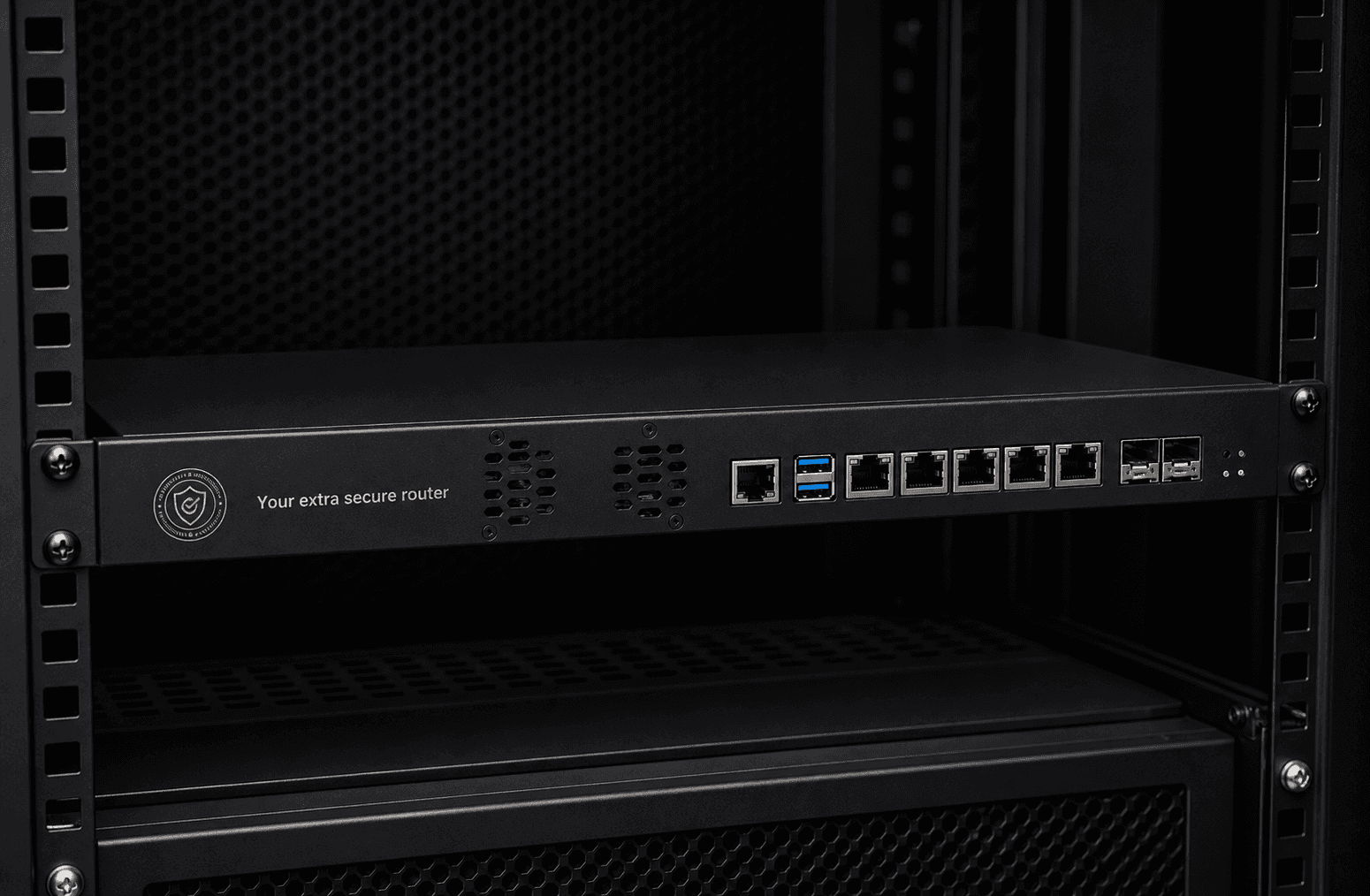
Rack-mounted secure router with a seal logo and Your extra secure router label

Home Lab

Custom Router & Firewalls

Network control is handled with open routing and firewall platforms where transparency, rules, and tuning matter.

OpenWRT

OpenWRT is useful when router behavior needs to be transparent and tunable: VLANs, firewall rules, packages, monitoring, and low-cost hardware flexibility.

OPNsense

OPNsense fits heavier routing and firewall needs where dashboards, reporting, VPNs, rules, and appliance-style reliability matter.

pfSense

pfSense is considered for mature firewall patterns, network segmentation, VPNs, and policy-driven routing when the setup needs a dedicated security boundary.

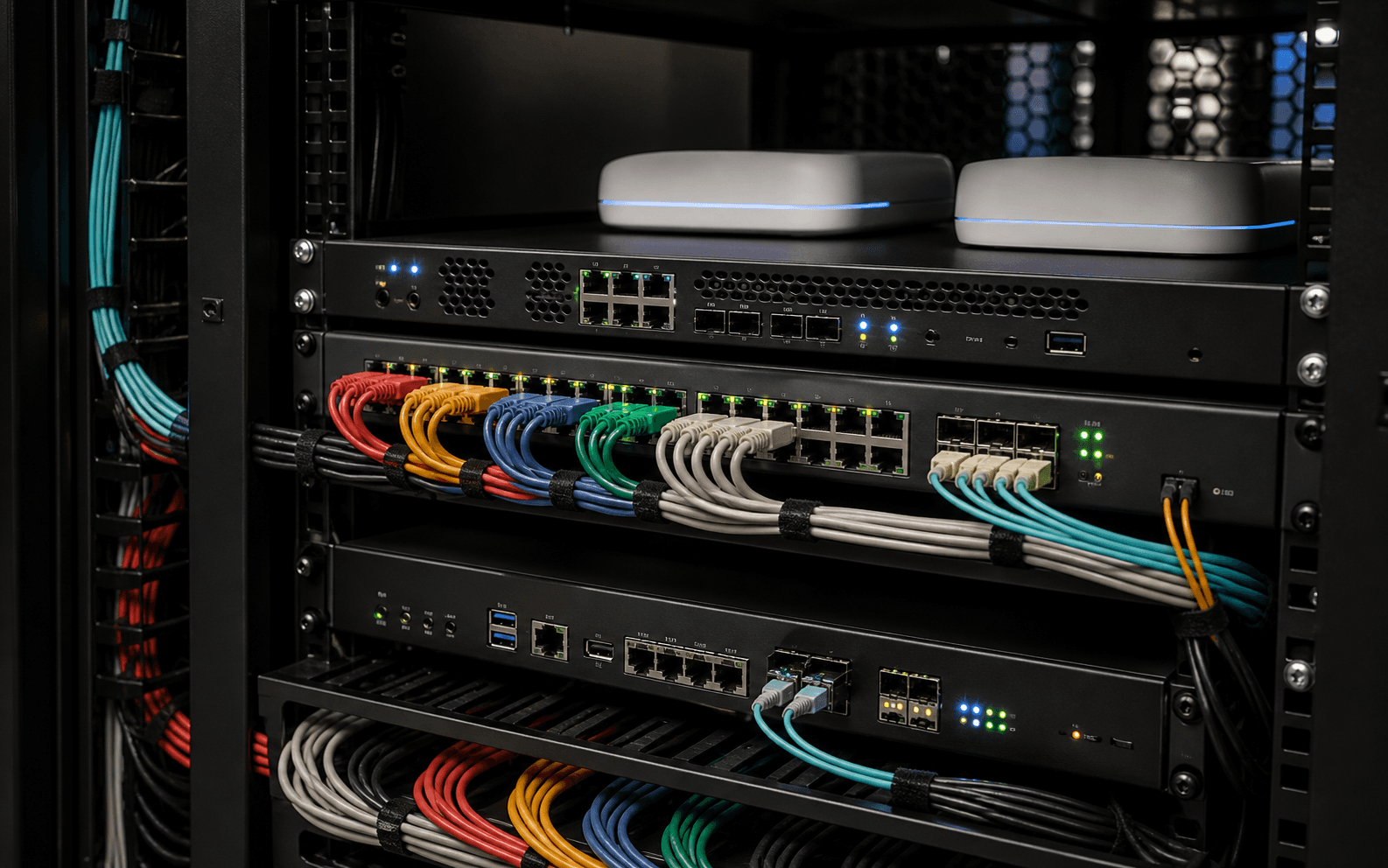
Rack-mounted network switch and router devices with fiber, UTP cabling, VLAN-colored runs, and mesh access points

Home Lab

Network

The network is designed for reliable throughput, sensible segmentation, and coverage across wired and wireless zones.

Fiber

Fiber is about backbone reliability, distance, isolation, and future bandwidth. It is especially useful between floors, racks, and high-throughput points.

High bandwidth UTP

High bandwidth UTP is still the practical default for many runs. The work is in choosing cable quality, terminations, routes, and switch capacity that do not bottleneck the system later.

VLAN

VLANs keep the home lab sane by separating trusted devices, IoT hardware, guest access, cameras, servers, and experiments. The real work is planning rules between those networks so segmentation improves safety without breaking everyday use.

Robust mesh Wi-Fi

Robust mesh Wi-Fi is designed around real coverage, roaming, interference, and device density. The goal is stable household behavior, not just high speed near the router.

Rack-mounted load balancer and proxy appliance with multi-WAN uplinks, routed service connections, and traffic monitoring

Home Lab

Load Balancers & Proxy

Traffic is shaped with multi-WAN routing, application-aware proxying, and reverse or forward proxy patterns.

Multi-WAN

Multi-WAN keeps important services available when one ISP fails. It needs sensible failover, policy routing, and clarity about which traffic deserves redundancy.

Layer 7 routing

Layer 7 routing is useful when traffic decisions depend on application behavior, domains, paths, or service identity rather than only IP addresses.

Nginx

Nginx remains a dependable tool for reverse proxying, static serving, TLS termination, and simple routing where explicit configuration is preferred.

Reverse proxy

Reverse proxies keep internal services behind a controlled entry point. This makes certificates, routing, headers, and access policies easier to reason about.

Forward proxy

Forward proxies are useful for controlled outbound traffic, filtering, debugging, and understanding what systems inside the network are trying to reach.

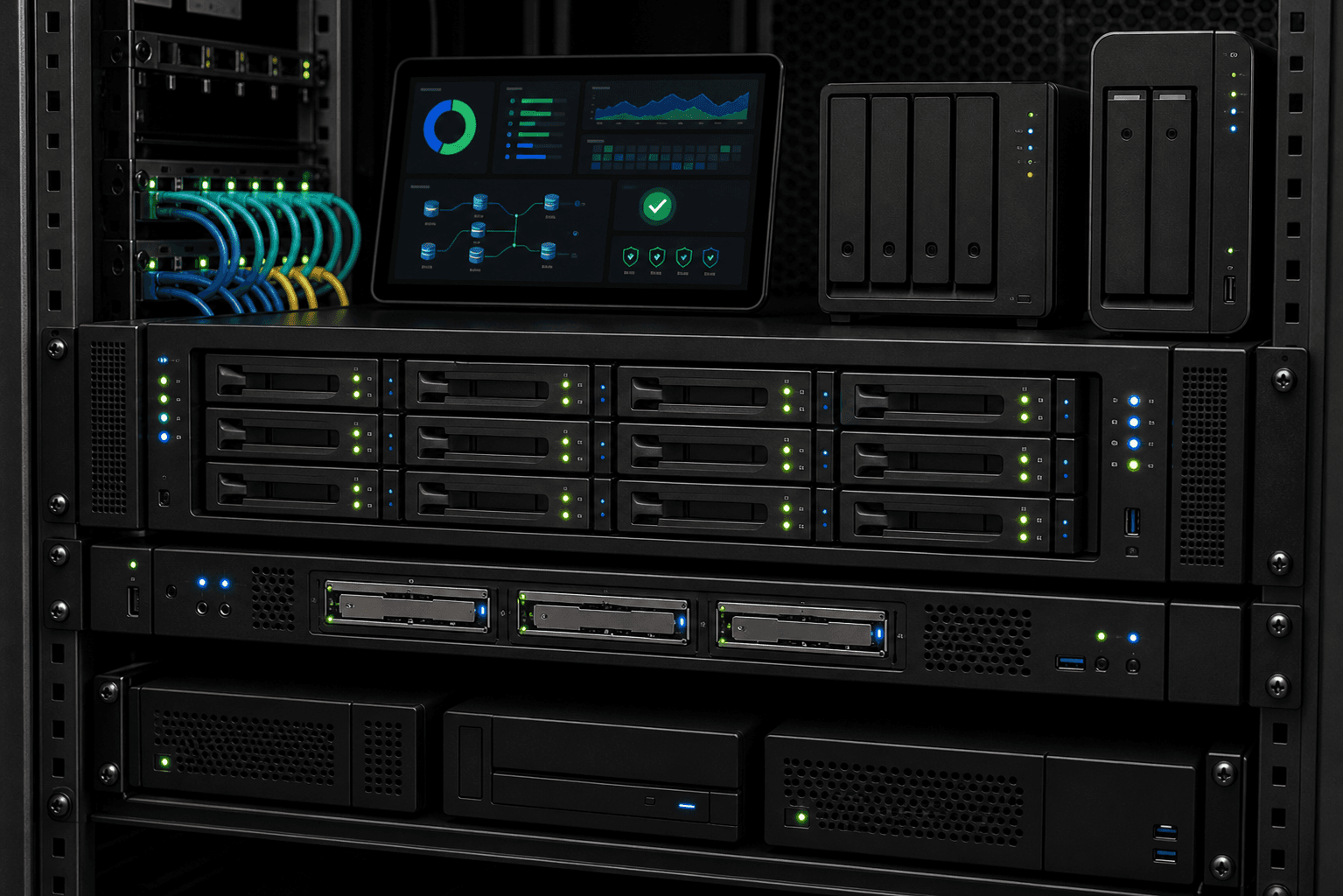
Rack-mounted NAS storage array with RAID drive bays, high-speed cache modules, backup hardware, and recovery monitoring

Home Lab

Storage

Storage work covers pools, RAID, NAS use cases, high-speed paths, caching, backups, and recovery planning.

Storage pool and RAID

Storage pools and RAID are planned around data value, drive failure, rebuild time, capacity, and the difference between redundancy and backup.

NAS

NAS is the shared memory of the home lab: media, documents, backups, app data, and archives. It has to be fast enough, recoverable, and boringly reliable.

High-speed storage

High-speed storage is reserved for workloads that actually benefit from it: VM disks, databases, caches, builds, and media operations.

I/O caching

I/O caching is tuned carefully because it can improve responsiveness but also introduce risk if power, writeback, and recovery are not understood.

Backup and recovery

Backup and recovery are designed as a tested habit, not a hope. The real question is whether a restore works when hardware, data, or configuration is lost.

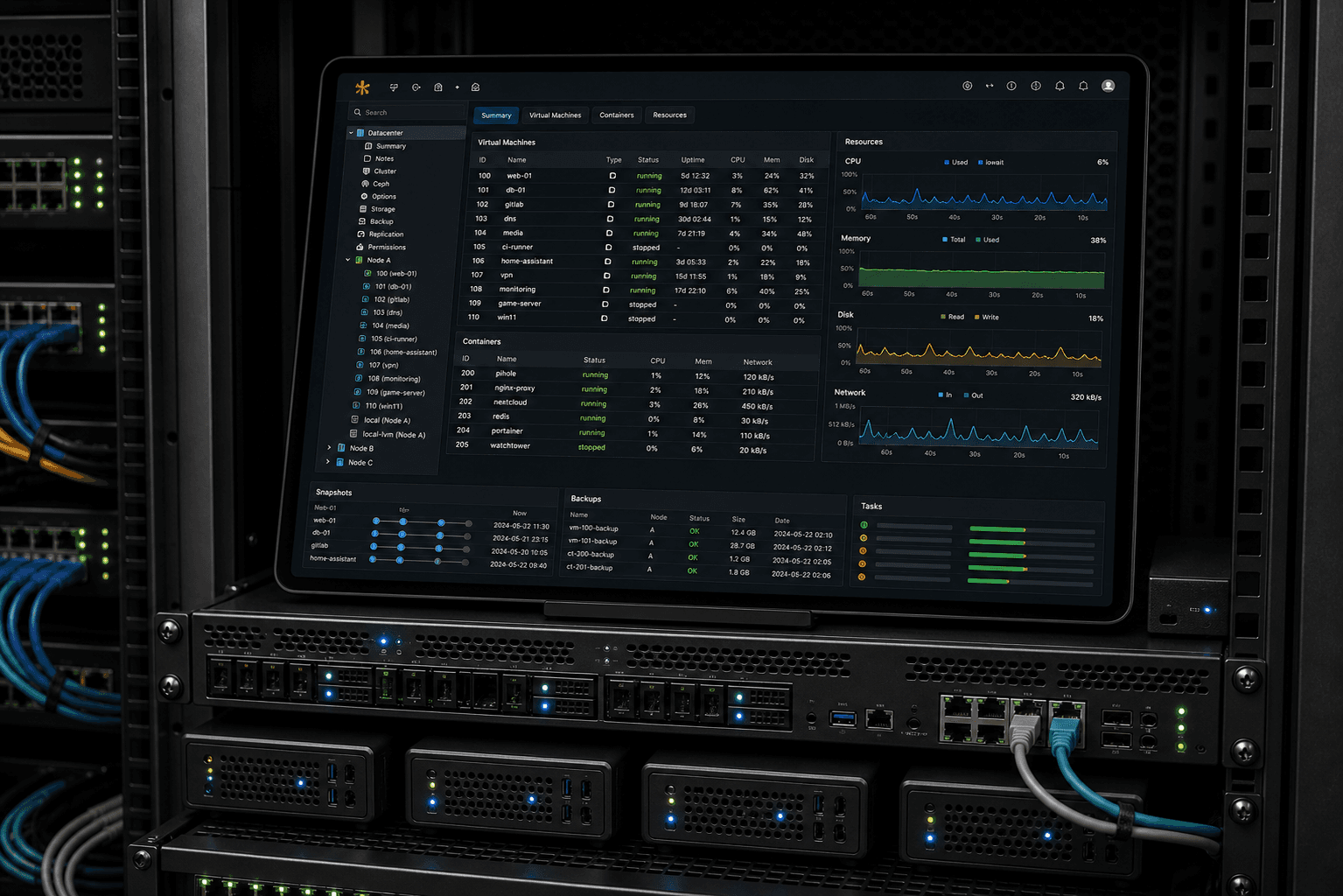
Rack-mounted virtualization host with a Proxmox-style dashboard showing VM rows, containers, resources, snapshots, backups, and tasks

Home Lab

Virtualization

Virtual machines and containers create isolated, repeatable environments for services, experiments, and recovery.

Proxmox

Proxmox is useful for running VMs, containers, snapshots, experiments, and service separation on accessible hardware.

VirtualBox

VirtualBox remains handy for local experimentation, OS testing, quick labs, and disposable environments before something graduates to the rack.

Containers

Containers make services portable and repeatable, but only when volumes, secrets, updates, networking, and observability are handled deliberately.

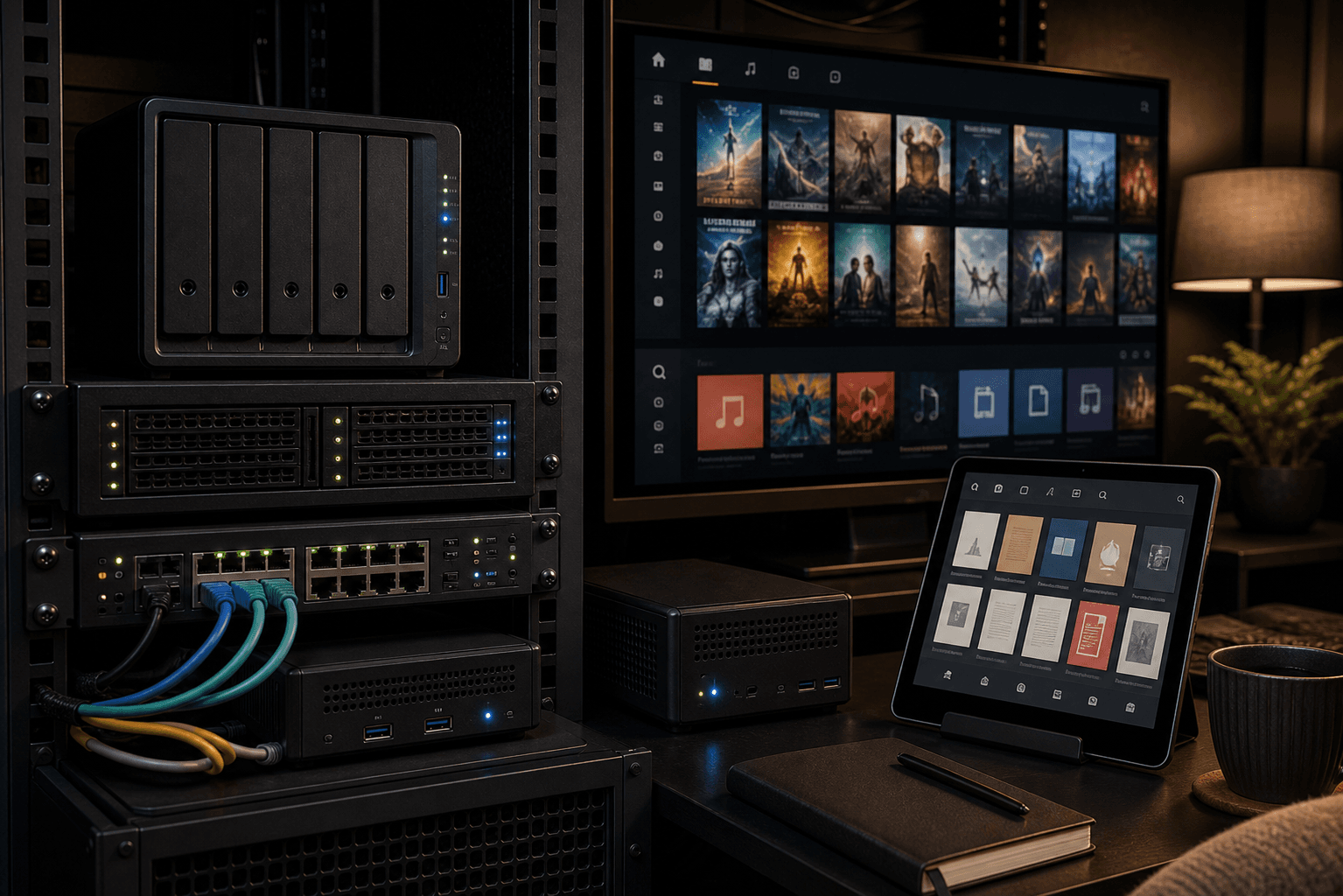
Local media and knowledge library setup with NAS storage, streaming screen, ebook library tablet, and home lab hardware

Home Lab

Libraries & Streaming

Media and knowledge libraries are organized locally for streaming, reading, indexing, and long-term access.

Plex

Plex is one route for organizing and streaming a personal media library, especially where clients and polished playback matter.

Jellyfin

Jellyfin keeps media streaming open source and local-first. It is attractive when control, privacy, and avoiding subscription lock-in matter.

Calibre

Calibre is a practical library system for ebooks and documents, turning scattered files into searchable, organized knowledge.

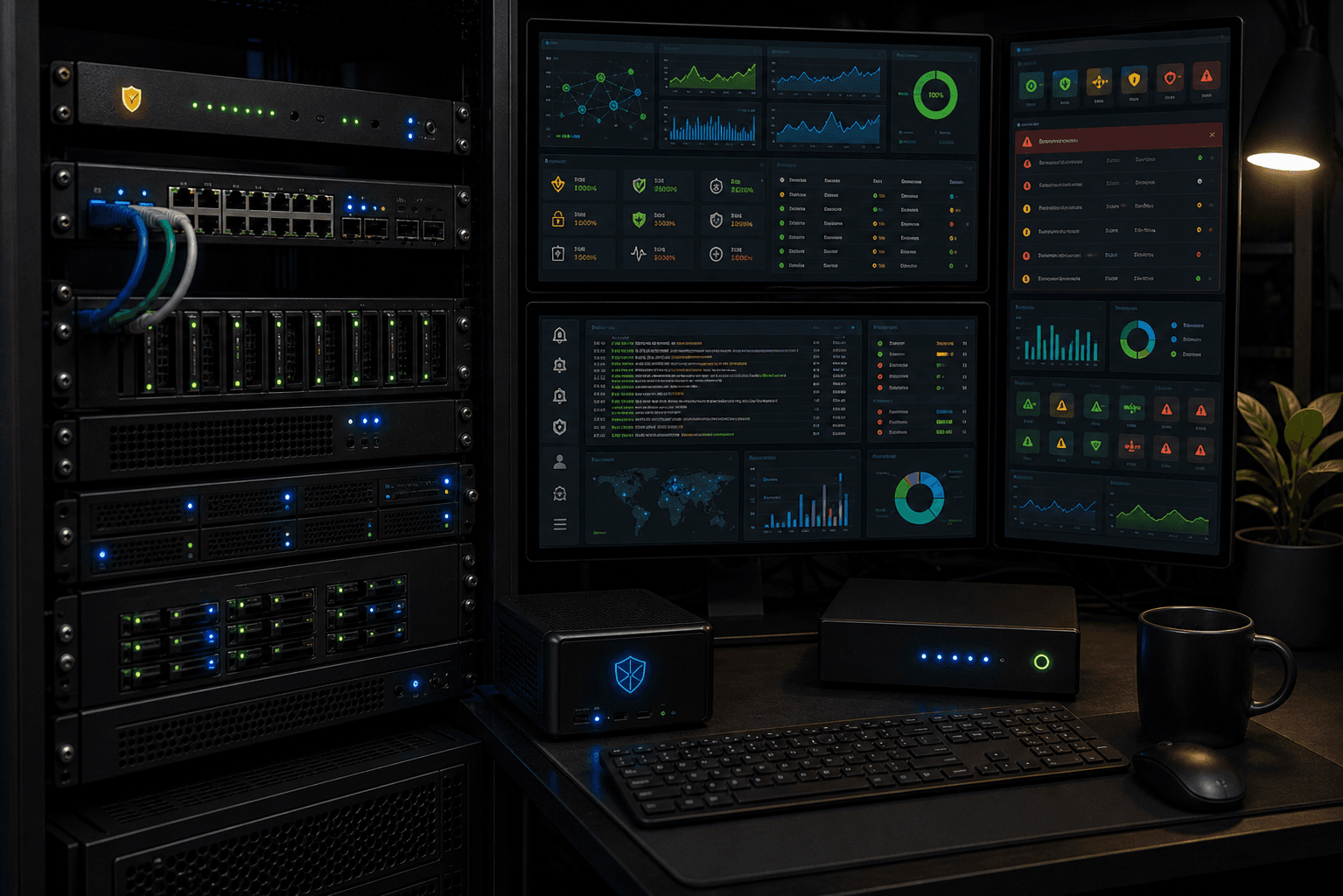
Home lab security and monitoring workstation with central logs, audit trails, alert panels, metrics dashboards, and rack hardware

Home Lab

Security & Monitoring

The lab is observable through logs, dashboards, audit trails, alerts, and reporting so failures become visible early.

Central logging

Central logging turns scattered failures into searchable history. It helps answer what changed, what broke, and whether a problem is repeating.

Audit and reporting

Audit and reporting give the system memory: access patterns, changes, uptime, resource pressure, and security-relevant events.

Grafana

Grafana makes the lab visible through dashboards that can be checked quickly: network, power, storage, services, and environmental signals.

Prometheus

Prometheus is useful for metrics collection and alerting, especially when services need to be watched consistently over time.